Wildfire risk drives 84% spike in California home insurance costs in 5 years, Stanford study finds

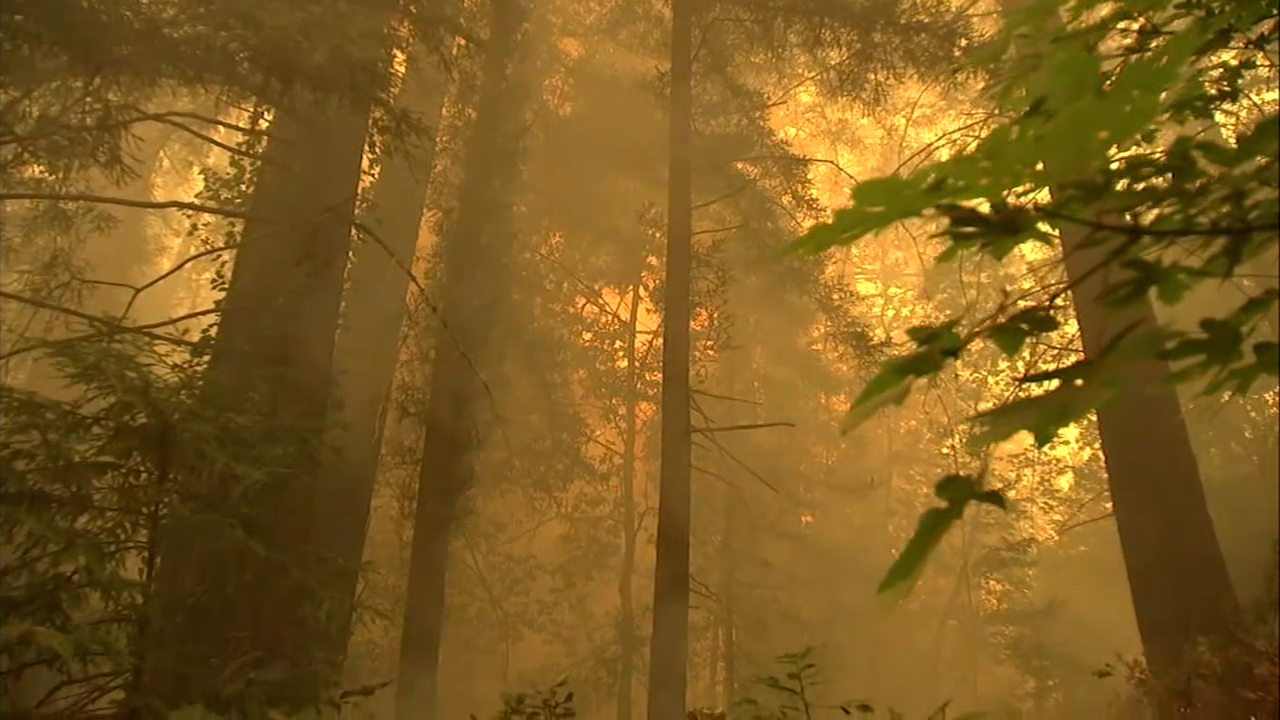
STANFORD, Calif. (KGO) -- While fast moving wildfires continue to threaten wide sections of California, another deepening crisis is smoldering.
Researchers at Stanford examined the forces driving what they say is an 84% increase in average homeowners' insurance premiums over roughly the last five years, according to their report.
Michael Wara, JD, PhD, directs Climate and Energy Policy for the Stanford Woods Institute for the Environment at the Doerr School of Sustainability.
"Well, we've seen rapid acceleration in the cost of fire in homeowners' insurance in the places where there is high wildfire risk. An important result from our paper is also that prices in the low-risk areas are still under control, you know, so there's sort of a this is like an 80-20 problem where 80% of the market where there's low risk is doing fine, 20% of the market, maybe 10 to 20% of the market, where risks are high is we've had an availability problem where it's been," Wara said.
MORE: Civil grand jury report warns of wildfire risk at SF's Glen Canyon Park
He says that's driven an expanding section of the market into the FAIR plan, the state-mandated insurance market of last resort. According to their analysis, the percentage of new mortgages backed by the more expensive FAIR plan coverage has now quadrupled to 5%. Making it more costly for many home buyers trying to enter the housing market.
"So, the FAIR plan, which is concentrated use of the insurer of last resort. The FAIR plan in California is concentrated in these high-risk areas. But it was starting to be a case in low-risk areas. You couldn't get coverage. And so, you'd have to go to this more expensive, you know, kind of more barebones insurer of last resort," Wara said.
He says reforms backed by the Newsom administration, which allow insurers to use specific types of risk modeling, are slowly beginning to take effect. But Stanford studies also argue for major investment -- not just in identifying wildfire risk but reducing it.
In a separate study, Stanford researcher Marshall Burke, PhD., examined the effectiveness of one option, controlled burns, with the goal of preventing wildfires from jumping into populated areas.
MORE: 600 goats graze Poplar Beach in Halfmoon Bay to reduce wildfire risk
"If you burn an area with prescribed fire, you get a dramatic reduction in the likelihood of extreme wildfire in subsequent years. We measure that benefit lasts about a decade or even a bit longer. So, number one, reduction extreme wildfire," Burke said.
Stanford researchers also point to another major health benefit of prescribed burns: reduced potentially toxic smoke generated by full-on wildfires. Researchers say the state's goal of pre-burning roughly half a million acres annually is realistic, but potentially years away.
"This is the current policy target in California. We're about maybe one-fifth of the way there, depending on how you count. So, we've got a long way to go. We estimate you can make a pretty substantial dent in risk at 500,000 acres per year. But you've got to do it every single year," Burke said.
The study also recommends increased funding for fire-hardening homes in high-risk areas. It all amounts to a set of policy recommendations that don't come cheap -- but with billions of dollars in future wildfire losses potentially riding on the outcome.