California's water crisis driving higher interest in desalination as a new source

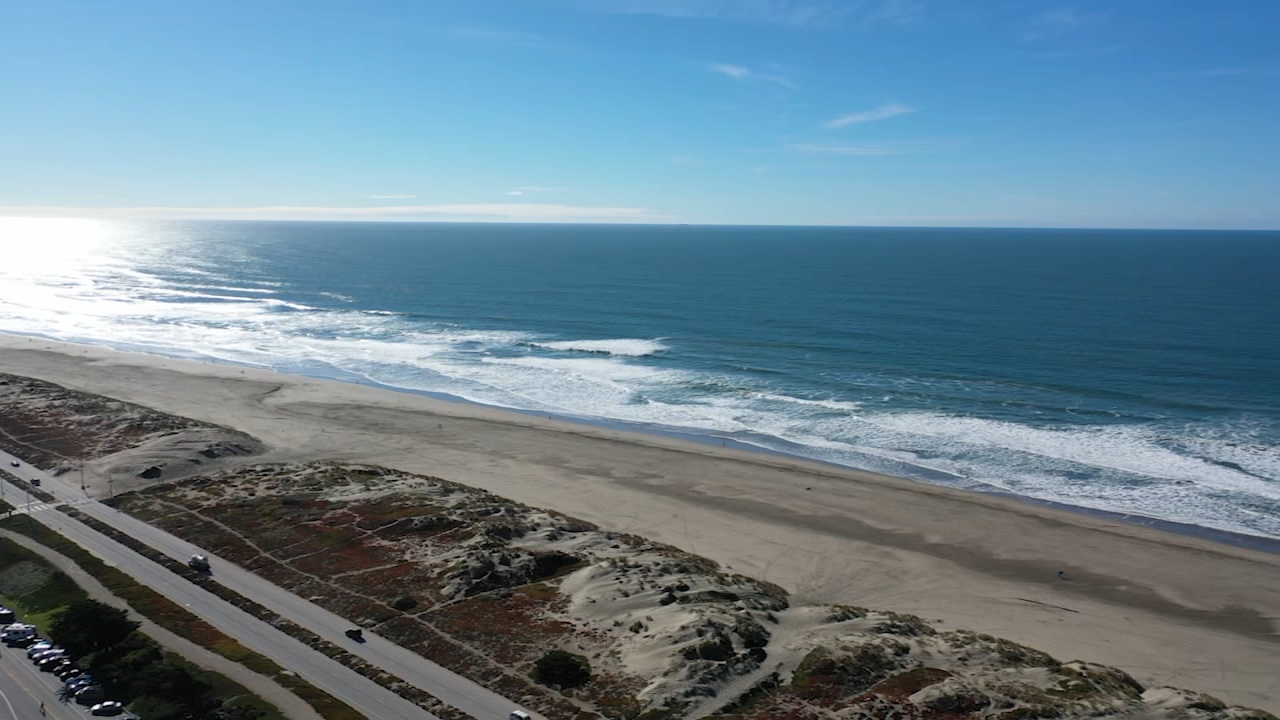
SAN FRANCISCO (KGO) -- From a fast-melting snowpack in the Sierra to over-pumped groundwater in the Central Valley and a drought on the Colorado River, California's water supply is facing enormous pressure. Increasingly, some believe the only real alternative is to draw water from the Pacific Ocean offshore.
Former Water Manager Tim Quinn believes he and his team at OceanWell can do it safely and more affordably.
We first profiled the company's technology several years ago. It works by placing a series of collection pods on the ocean floor. The pods take advantage of the intense pressure at lower depths to force seawater through a system of salt-filtering membranes. The fresh, desalinized water is then pumped to shore, leaving the leftover salt, known as brine, to drift out to sea -- which, according to the company, helps avoid a core environmental criticism of traditional onshore desalination plants.
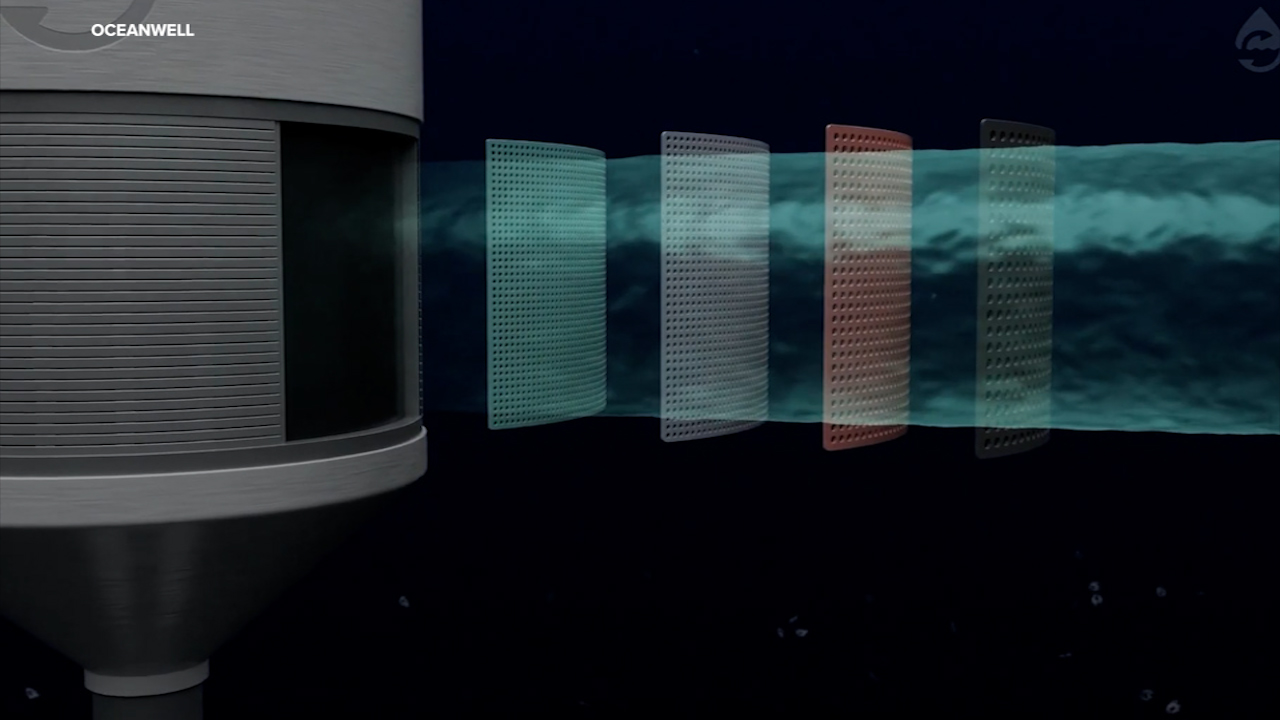
"We do it out in the ocean at depth 400 meters or deeper. And when you go down there, most of the problems that you have onshore are solved just by moving the location of your reverse osmosis process," Quinn said.
The company just released data from an ongoing study on a reservoir in Southern California. They say the system produces water roughly 10 times purer than conventional drinking water, without damaging surrounding marine organisms.
"We're about halfway through this five-year process of improving the technology. And so far, everything has worked out exactly the way we intended it to. So, the framework of putting it in Santa Monica Bay is there," Quinn said.
It comes at a time of renewed interest in desal.
RELATED: Bay Area company develops new technology that holds promise of safer desalination practices
Case in point, take a look at the massive Carlsbad ocean-desalination plant, originally built to help supply water-starved San Diego County.
Flash forward a decade, and operators are now reportedly in negotiations to sell a portion of their surplus to two western neighbors: Arizona and Nevada. It's a kind of supply swap in which those states pay for the water used in San Diego, including desalinated water, while San Diego releases a portion of its Colorado River water rights in return.
The flexibility is catching the attention of water managers in other parts of California.
Jake Walsh is vice president of engineering at San Jose Water.
"Desalination is used across the world as a source of water. And it is something we're actively looking at here, because we have the Pacific Ocean to our west. We have the bay to our north. And so, it is the source of water that we need to investigate," Walsh said.
MORE: Stanford researchers launch ambitious plan to map and track water: Here's how
The agency is in exploratory talks with OceanWell as part of a broad sustainability program that encompasses other technologies, such as enhanced wastewater purification. Walsh says the goal is to future-proof San Jose's water system against threats ranging from drought and climate change to disruptions in the state's water delivery system.
"Especially with the state of the Delta -- the concerns we have with its reliability longterm. If we have a large earthquake, it's at risk of failing. And it's a concern for us. So that's why we need to develop local water supply sources," he said.
Back in Southern California, OceanWell hopes to move forward with its first project in Santa Monica Bay over the next several years: a deep-sea water farm deployed several miles off the coast of Malibu. And while it's taken years to prove the technology, Quinn said he believes the timing is right for a new water source for California.
"I have never seen a situation as dire as the one we're facing right now, where both of our freshwater systems in Northern California and on the Colorado River are in very dire condition, of course, that their condition creates opportunities in the ocean. Well, we want to help solve those problems," Quinn said.