SF sees drop in unsheltered homelessness, reports 15-year low from most recent count


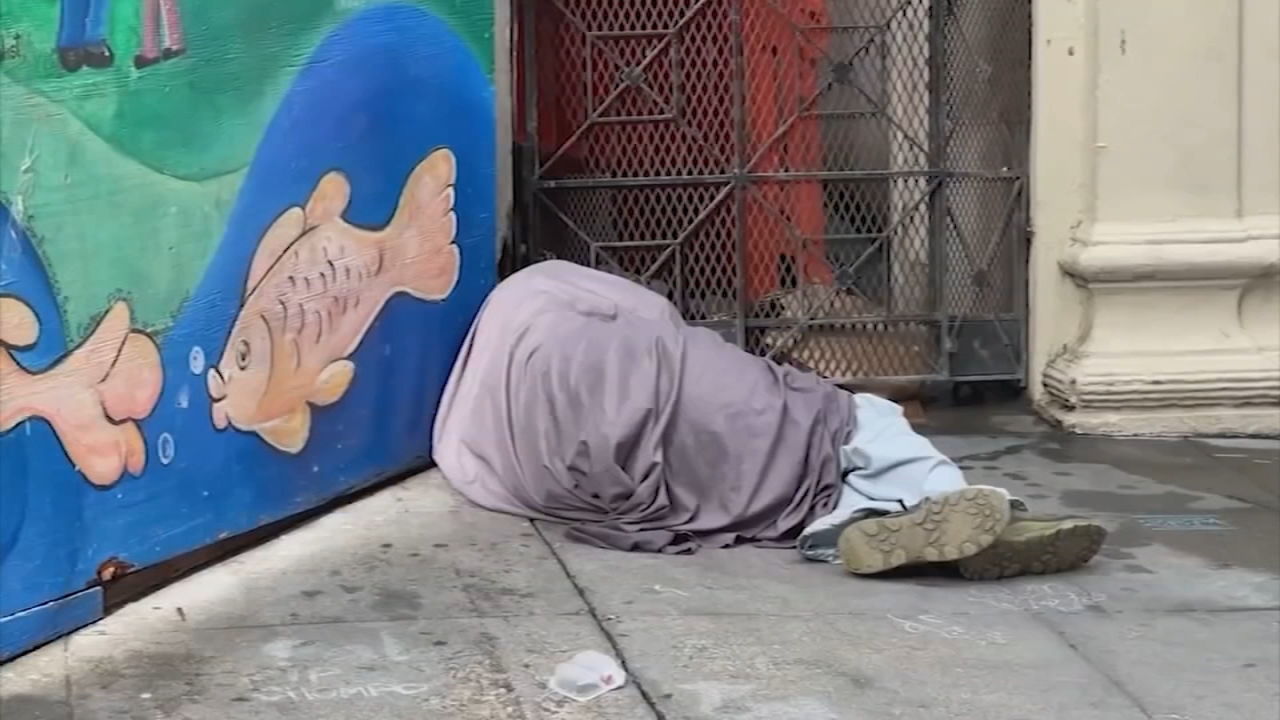
SAN FRANCISCO (KGO) -- San Francisco Mayor Daniel Lurie said the city is seeing a significant decline in unsheltered homelessness, citing preliminary results from the most recent "Point-in-Time" count as evidence that current strategies are having an effect.
The annual count, conducted on one night in January by outreach workers and trained volunteers, measures the number of people experiencing homelessness across the city.
According to the mayor's office, the latest results show unsheltered homelessness at its lowest level in 15 years.
MORE: SF names new Department of Homelessness director as city faces $643 million deficit
"Unsheltered homelessness in San Francisco is now at its lowest level in 15 years," Lurie said.
Data reviewed from the count indicates a shift. In 2024, the city identified 8,323 homeless individuals. The 2026 count showed a 4.2% decrease overall and found that, for the first time, more unhoused people were staying in shelters than living on the streets.
The findings, however, have drawn scrutiny from advocacy groups.
The San Francisco Coalition on Homelessness questioned how the data was collected and whether the results accurately reflect conditions on the ground.
"A lot of what this mayor focuses on is the tent count and that is pretty meaningless. Because that is just a piece of fabric that is not a human," said Jennifer Friedenbach, executive director of the Coalition on Homelessness.
She also pointed to changes in the timing of the count.
"It's hard to say because they change the count so dramatically so usually, they count at night and this year they counted in the morning and they were so late getting started," Friedenbach said.
Despite her concerns, Friedenbach acknowledged progress in other areas.
MORE: SF's quarterly homelessness data shows record lows for 3rd time since Lurie took office
"On the other hand, we have been making some progress with Prop C we are up to over 5,000 units that have been added, over 8,000 people housed and almost 3,000 kids. So, that is really fantastic and can also be factored in which is good," she said.
City officials defended the methodology, saying adjustments were made to improve accuracy. Kunal Modi, San Francisco's chief of health and human services, said the latest count relied less on visual estimates.
"A big difference was previous counts had been a visual count, in which case a lot of outreach workers were making assumptions or potentially double-counting individuals. We actually engaged with folks," Modi said.
Lurie also pointed to policy changes and new facilities as part of his administration's approach to homelessness.
"We ended the policy of handing out fentanyl smoking supplies without connections to counseling or treatment. We opened 822 Geary, a 24/7 police-friendly stabilization center to connect more people to longer-term treatment and care," Lurie said.
Health officials said the city has also shifted its approach inside shelters.
Daniel Tsai, director of the San Francisco Department of Public Health, said staffing changes are aimed at providing more comprehensive support.
MORE: SF changes method to count unhoused; advocate believes it's political, will lead to undercount
"Increasingly, (we are) putting clinical staff, caseworkers, nurses, health care workers in shelters, in other housing settings because we know it's not enough just to house somebody. They need support, they need case management," Tsai said.
The city has set aside more than $1 billion over the next two years to address homelessness, even as San Francisco faces a multimillion-dollar budget deficit.
Historically, the city has received about $55 million from the federal government to help fund homelessness programs.
That funding could be at risk, according to Shireen McSpadden, executive director of the Department of Homelessness and Supportive Housing.
"I think my concern right now is that the federal government is talking about cutting back on some of these funds. That's why we would see a cut," McSpadden said.
The latest Point-in-Time count also found a 15% increase in families experiencing homelessness since 2024.
The mayor and his team said helping more families is a key focus.
"We have hope and we have much more work to do," said Mayor Lurie.