Tropical Storm Lala rakes Hawaii with high winds and rain without making landfall

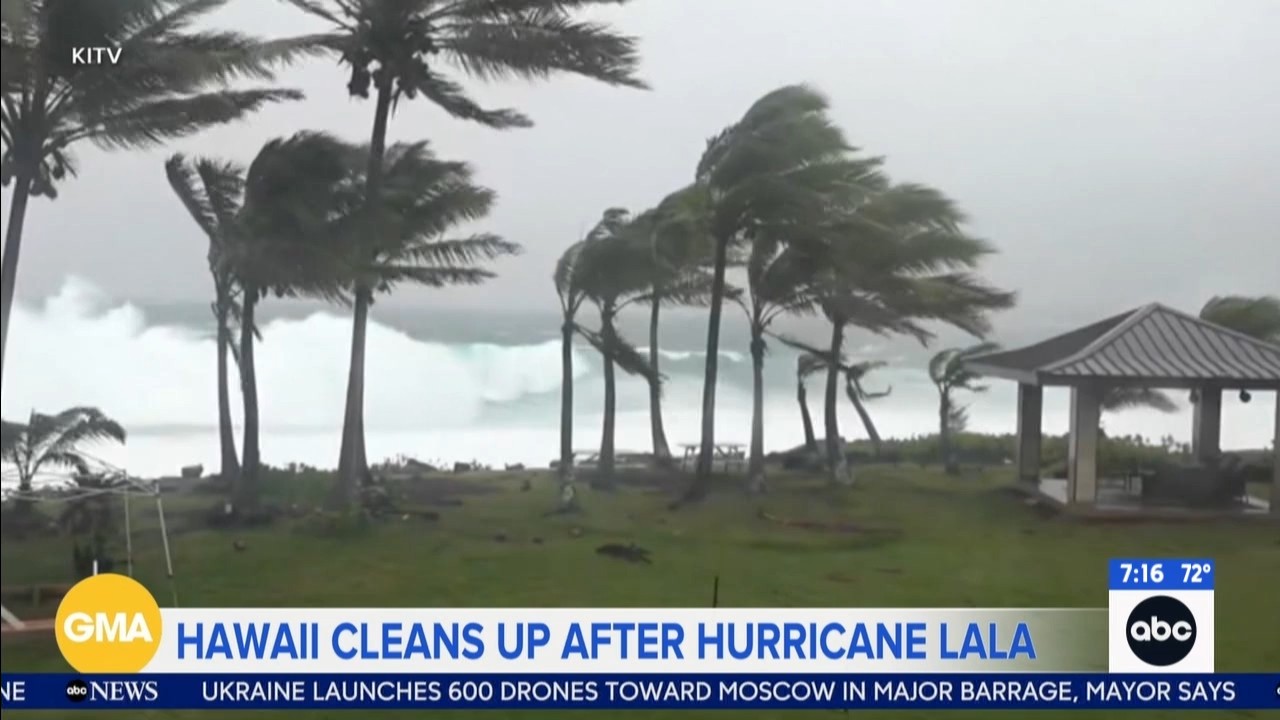
Hurricane Lala weakened Sunday to a tropical storm after raking Hawaii without making landfall, its heavy rains and winds strong enough to sweep around 100 homes off their foundations on the Big Island, officials said.
Gov. Josh Green said no one is believed to have died when the homes washed away. Earlier, a search-and-rescue mission was launched in the coastal communities of Na'alehu and Wai'ohinu, near the Big Island's southern tip.
He spoke at a news conference as the storm continued to punish the islands with strong gusts and pounding rain, reaching a total of nearly three feet (one meter) in places.
Cynthia Channels, a local organizer who works with unhoused people and families in need, has been driving around Oahu in her pickup truck, assessing damage. For her, the wind has been the worst part of the storm.
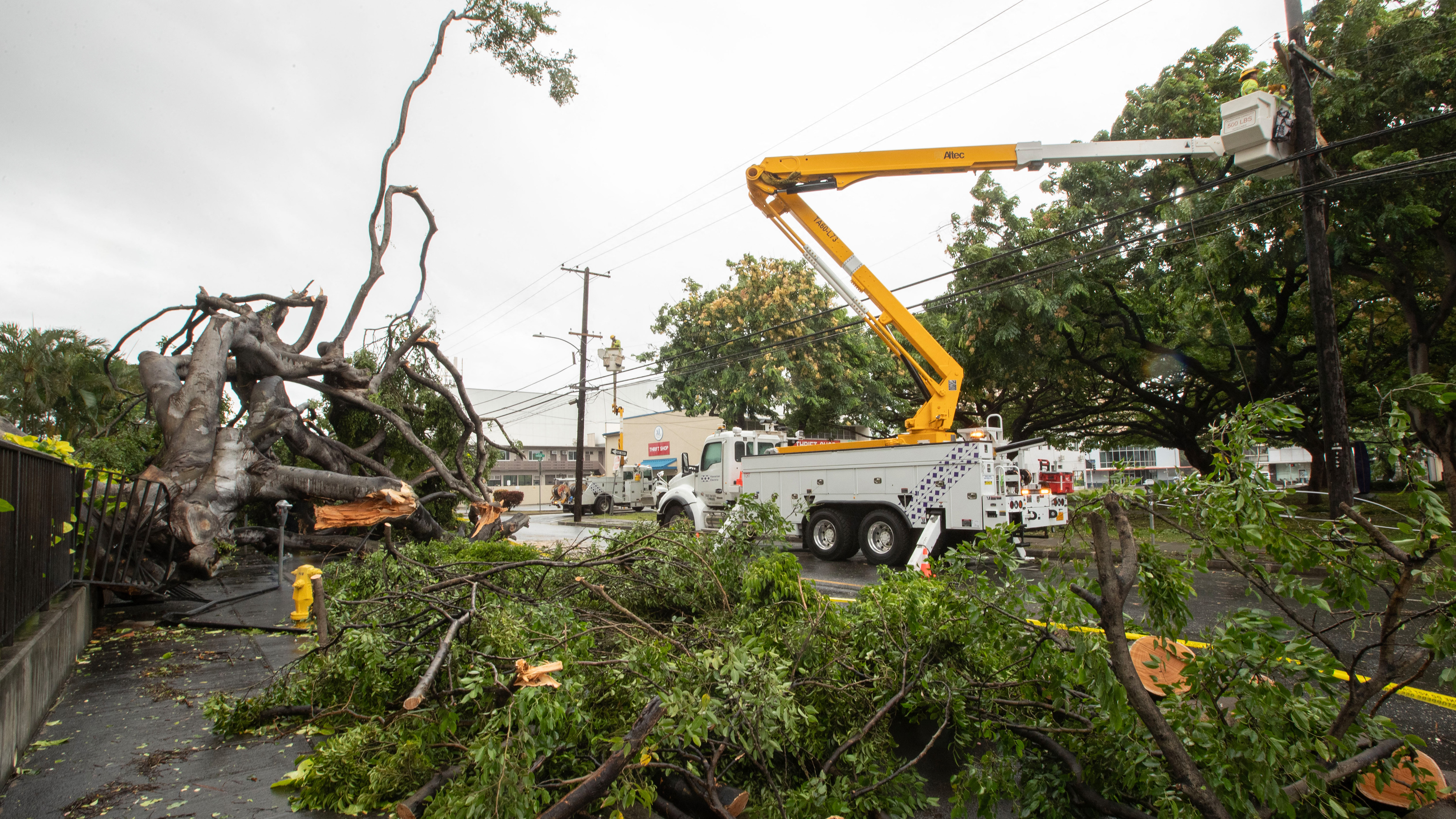
"The winds are really bad, people's shingles are falling off the roofs," Channels said.
Green said its not clear if a vehicle wreck that killed one person Saturday in the South Point area of the Big Island was storm related.
Storm hits islands with flooding and power outages
Honolulu, on Oahu, was bearing the brunt of the tropical storm conditions spreading westward over the island chain. The Honolulu Fire Department had received more than 600 weather-related responses by noon local time Sunday, including 147 reports of downed trees. There were also roofs blown off, downed power lines and one swimmer who had to be rescued, a city statement said.
Much of the state remained under a flash flood warning, though the National Hurricane Center downgraded the Big Island to a flood advisory Sunday.
"Basically, the best thing to do right now is just stay home for a bit longer," weather service meteorologist Stephen Parker said. "The storm won't last forever and once those kind of threats get cleaned up, it will be safe to be out and about again."
More than 200,000 homes and businesses were without power by midday, according to the utility tracker poweroutage.us. That included nearly two-thirds of customers on the Big Island. At least three hospitals were operating on generator power, the governor said, adding damage to roads and several small bridges was making some places hard to reach.
"Everyone is safe and healthy," said Green, a medical doctor who previously worked in emergency departments of remote hospitals on the Big Island. "But boy, a lot of work ahead."
Powerful waves pounded the Big Island's coast. Just missing landfall, the eyewall didn't weaken, and its winds pounded mountainsides as bands of rain blew nearly sideways. The storm came three years after the state experienced the deadliest wildfire in the U.S. in more than a century.
Lala isn't losing strength as wind and rains lash Hawaii
Tropical storm warnings were in effect for the islands of Maui, Molokai, Lanai, Kahoolawe, Oahu, Kauai and Niihau, raising the possibility of destructive flooding.
The heaviest rain Sunday was falling on Lanai, Moloka'i and Oahu, while the highest wind gusts topped 100 mph (161 kph) at the towering Mauna Kea volcano on the Big Island, Parker said.



As of 11 a.m. in Hawaii, Lala was centered about 140 miles (220 kilometers) west of Honolulu with top sustained winds of 65 mph (100 kph), the U.S. National Hurricane Center said in its latest advisory. The storm was moving west-northwest at about 16 mph (28 kph).
The advisory said the storm's strength is expected to change little through Monday and forecasters expect Lala could become a hurricane again on Tuesday or Wednesday when it has moved well west of the island chain.
Some higher-altitude places on the Big Island, dominated by Mauna Kea, have been hit with as much as 35 inches (89 centimeters) of rain. That's enough to loosen steep slopes where some of the 210,000 islanders live off the grid in improvised housing.
As the hurricane approached, shelters were opened, events were canceled and ranchers were urged to leave their cattle in pastures rather than structures that might collapse. Many residents are still dealing with the aftermath of devastating floods in March and took precautions.
A beloved bakery is damaged
The Punalu'u Bake Shop on in Naalehu, Big Island, a tourist hotspot and major local employer, was severely damaged. Zachary Kennedy, the manager of the Hawaiian sweet bread bakery, said water rushed through their factories and retail store, leaving behind around three feet (1 meter) of mud.
"This is a different level of damage, it's literally catastrophic," Kennedy said.
Kate McLellan, a resident on Oahu's North Shore, was still waiting for the worst of the storm after her power went out Sunday morning, glued to the weather network.
In March and April, her community was hit by back-to-back storms with heavy rain and high winds, keeping residents on high alert. Memories of that storm were "giving that same uncertainty and hesitation and panic and anxiety," McLellan said.
Nicole Clark has been sheltering in place on Kauai and is prepared to stay there after her school was canceled Monday for her kids because of a tree blocking a road. Still, she said she's inspired and comforted by the sense of community established across Hawaii during storms like this.
"It's a good feeling during hard times," Clark said.