'Dia San Jose' brings the traditions of Dia de los Muertos to Downtown San Jose


SAN JOSE, Calif. -- In downtown San Jose, California, there's a fun and unique celebration going on.
"A lot of the folks who are not able to go to the areas where these traditions are from," says local artist Chris Granillo, "see it represented here in the United States."
"You can't celebrate it in the most traditional ways you would back home in Mexico," says David Ocampo, "going to adorn the graves and clean up the graves that are across the street from the town so this way we keep traditions alive."
Ocampo is the Executive Director of 'Dia San Jose,' a Dia de los Muertos festival located in Downtown San Jose.
"A lot of cultural arts, a lot of food, dance, music, we have Lucha libre," Ocampo says, "just a whole variety of stuff that reflect the traditions of where we are today as a community."
Dia San Jose is a festival that celebrates all the traditions of Dia de los Muertos, or Day of the Dead, all wrapped up in a festival scenario in Downtown San Jose.
Dia de los Muertos is a Mexican holiday where families honor loved ones who have passed away.
"Part of it is on November 2 going to the cemetery and bringing flowers and spending time with those people who have passed," Says Chris Granillo. "In Mexican culture, we see death as a vehicle to the next world and at the same time being with your loved ones even though they're not here, in spirit, we kind of laugh, we talk about it in a humorous way, having a conversation with them, adding music, food, and dance to it."
Thousands of people listened to music, ate delicious food, and danced at Dia San Jose while immersed in both historic and modern traditions.
"Well have lowrider altars which is unique," says Ocampo. "Blvd Bombs, which has been with us for 12 plus years basically brings their lowriders, opens up their trunk, and turns it into an altar. It's really building altars to those who have gone before us, right? Those that have passed. It's just keeping their memory alive. "
Granillo adds, "There's photos, there's memorabilia, and also candles, and marigold flowers which is a native plant to this festival and cultural as a ceremonial use, there's also sage and other sacred elements to it."
Angelica and Nahum Garcia are the owners of 'Oaxaca To Go.'
"Something that always has to be on the altar is the tequila or mezcal, mole, and different fruits," says Nahum. "These are the main things that should be there and for us it's a good day to make all the things that our people who pass away enjoy to eat."
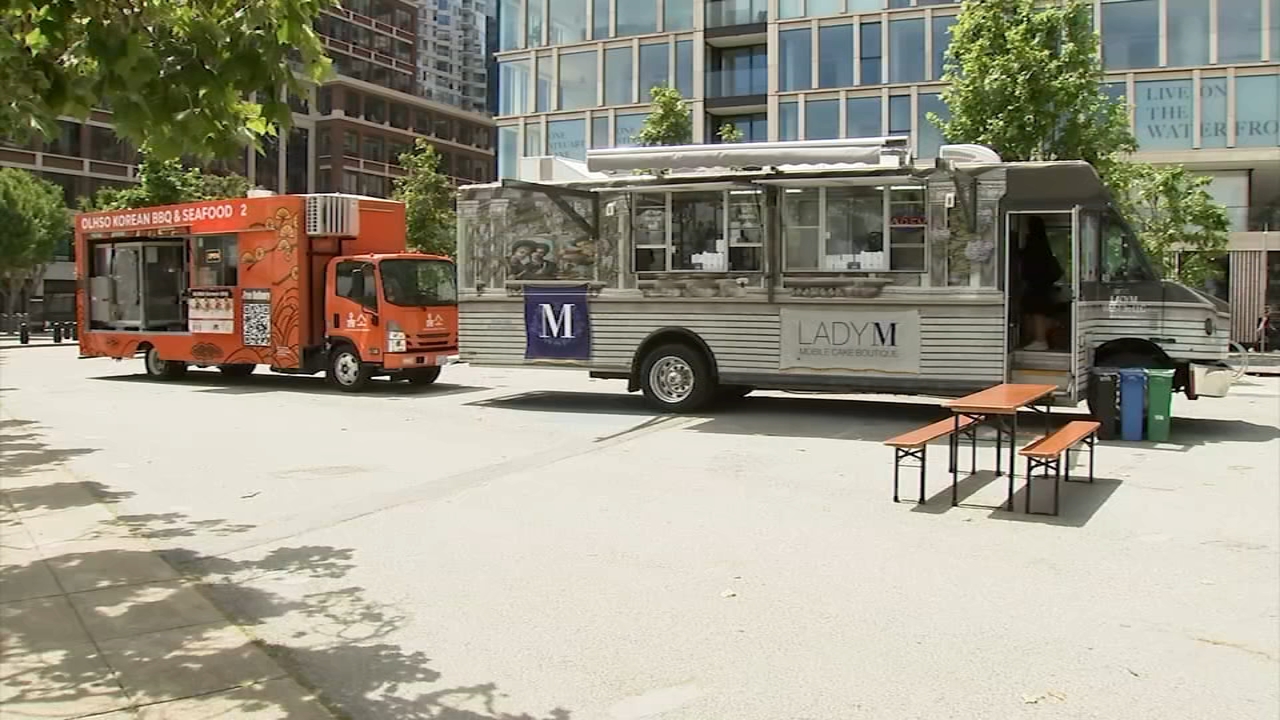
Food is a big part of the holiday and the Garcias are experts. They brought the flavors of Oaxaca, Mexico to Da San Jose with their restaurant, "Oaxaca To Go."
"Really the food is the most special," says Nahum. "Tlayudas is like something that represents Oaxaca. It's a big tortilla because people from there, they make tortillas like this size, maybe bigger. When you see the Tlayudas, we try to make it more close to what is found in Oaxaca."
Oaxaca To Go is one of more than 100 vendors who participated in the annual festival.
Chris Granillo is a local artist and was chosen to create this year's festival artwork.
"It's an honor for me to be part of this and having my artwork out there and being seen," says Granillo. "I'm the artist for this years Day of the Dead festival and this is the image I created for this years event. This was basically a sketch I developed in a month period and this is what I came up with. The lady here is holding an offering like an "ofrenda" with the marigold flowers and inside it spelled San Jose, Califas in honor of this event. The offering is what you would bring to a cemetery or on the altar and the candle represents the flame while you do prayers or ceremonies around that. Half the face is painted in Day of the Dead makeup and half the face is without the makeup, so I wanted to show the festive part of being alive and also having the past and present."
The holiday honors the past and present, while the event sets the tone for the future.
"It is an education because its passed on to the next generation and the youth sees it," says Granillo. "Being a historian myself, I do really love capturing a lot of the aspects of tradition. Every year, I see something new and get influenced by it so as a kid I remember seeing that and I've been doing this my whole life coming to these festivals so now I'm here as a vendor and as this years artist so I think it just draws inspiration to the next generation."
Still have questions about the holiday? Well, David has some advice.
The best thing I can tell you is go watch Coco because that really explains it all," says Ocampo. "It's about not forgetting the ones who have passed before us, keeping them alive in our memories and keeping their memories at the forefront."