UPDATES: San Francisco federal trial over Trump's National Guard deployment to LA

Monica Madden Image
Last updated: Thursday, August 14, 2025 2:34PM GMT
Federal judge questions justification for National Guard in LA

SAN FRANCISCO (KGO) -- A federal judge heard arguments in San Francisco on whether the Trump administration violated federal law when it deployed National Guard soldiers and U.S. Marines to Los Angeles following June protests over immigration raids.

RELATED: Trial begins on whether deployment of National Guard to Los Angeles violated federal law

Democratic Gov. Gavin Newsom sued, saying the President's move violated federal law -- and he requested that the courts order the president to return control of the troops to the state.

An 1878 law, known as the Posse Comitatus Act, prevents the president from using the military as a domestic police force.

U.S. District Judge Charles Breyer is presiding over the case. Since it is a bench trial, there is no jury and he alone will make the ruling. Breyer is the brother of retired Supreme Court Justice Steven Breyer.

On Monday and Tuesday, state and federal lawyers presented evidence and questioned witnesses, including a two-star Army general and a top Immigrations and Customs Enforcement official.

About 250 national guard troops still remain in the LA area.

The trial in San Francisco could set precedent for how Trump can deploy the guard in the future in California or other states.

State and federal attorney submitted more than 19,000 pages of discovery including 3,400 documents. The third and final day of the trail will resume at 9 a.m. on Wednesday.

ABC7 News reporter Monica Madden was in the courtroom. See her updates on the hearing below.

Aug 12, 2025, 10:25 PM GMT

Maj. Gen. Scott Sherman is back on the witness stand

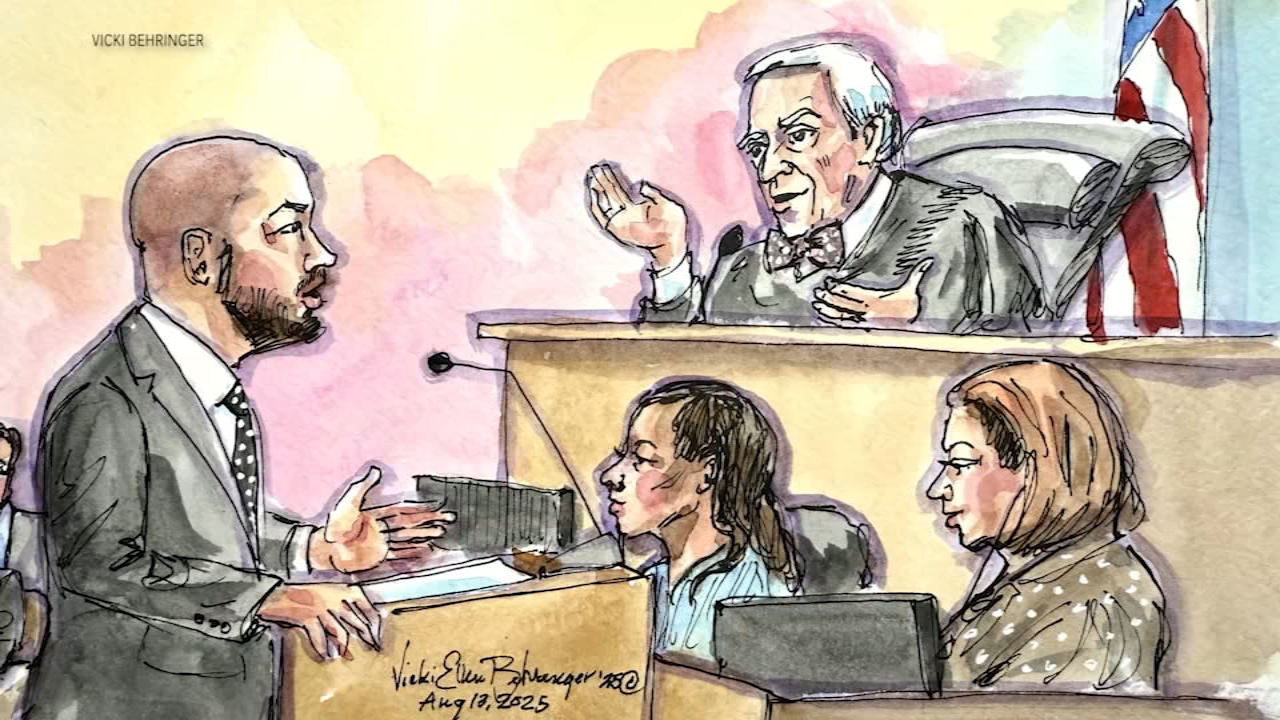
Court has resumed for Day 2 of the Newsom v. Trump bench trial in U.S. District Judge Charles Breyer's San Francisco courtroom. Maj. Gen. Scott Sherman is back on the witness stand first thing this morning. He commands Task Force 51, the Guard contingent that Trump admin sent to LA in June.

DOJ lawyer is questioning Sherman about a June 23 memo from Sec. Hegseth about the LA mission, reading: "Service members may not perform direct law enforcement activities such as searches, seizures, evidence collection or arrest." Sherman testifies troops did not violate that."

Sherman says he wants the public to know "we were doing exactly what we were told to do, exactly in line with federal law, and that we were not conducting law enforcement operations," adding the Guard was in LA to protect federal personnel and property, nothing else.

A U.S. Army North Fifth Army slideshow was shown in court again, which has guidance about "prohibited law enforcement functions" under the Posse Comitatus Act. It was a long list, but these are in red: security patrols, traffic controls, crowd control, riot control.

Sherman says his understanding, according to Trump and Hegseth memos, is those functions are red because the Guard can legally do under certain circumstances. Judge Breyer had a series of follow-up questions, asking why would those be listed as prohibited if soldiers can perform those duties.

Then came California Department of Justice Deputy AG Jane Reilley for the cross-examination. It was about a half-hour or so questioning from both parties largely about specifics of the Department of Defense's request for Guard assistance in LA.

Reilley asked Sherman if the DoD asked the Guard to set up perimeters, would he grant the request? He says without an identified imminent threat, it would have "never gone past our legal review."

The DOJ then showed a clip from President Trump's press conference Monday where he announced he is deploying the National Guard in D.C.

It was this quote from President Trump: "We have other cities also that are bad, very bad. You look at Chicago, how bad it is. You look at Los Angeles, how bad it is. We have other cities that are very bad. New York has a problem, and then you have, of course, Baltimore and Oakland. We're not going to lose our cities over this...we're going to clean up D.C. real quick."

The CA DOJ asks Sherman if he has received any word or request for sending more National Guard troops to other California cities (like Oakland, as Trump mentioned Monday). Sherman said no.

With no further questioning, he was dismissed as a witness.
Aug 12, 2025, 2:26 PM GMT

Federal trial over Trump's deployment of federal troops in SoCal enters 2nd day

Today is day two of a hearing in federal court in San Francisco over President Trump's deployment of federal troops in Southern California.

Back in June the president took control of the California National Guard and also ordered Marines to Los Angeles after protests over immigration raids. He claimed there was an emergency and the troops were needed to protect federal buildings.

California sued, arguing the President's action was illegal.

Dean of UC Berkeley Law Erwin Chemerinky said, "The challengers are going to try and argue these troops were used for domestic law enforcement, that they were engaged in all the things police regularly do."

The trial is expected to last three days. This is not a jury trial, so the judge will rule on the legality of the deployment.

Aug 11, 2025, 10:48 PM GMT

Los Angeles ICE field office director takes the stand

The next witness called to take the stand is Ernesto Santacruz, the Los Angeles field office director for U.S. Immigration and Customs Enforcement.

Aug 11, 2025, 9:31 PM GMT

CA lawyers call Deputy Commanding General for the National Guard US Army North to stand

California lawyers called Major General Scott Sherman to the stand. He is currently the Deputy Commanding General for the National Guard U.S. Army North (5th Army).

Sherman deployed to LA on June 9.

California lawyers asked Sherman about his primary responsibilities, which he said included preparing and training the troops that Trump and Hegseth sent to LA. Sherman says that also included ensuring troops were compliant with the law, including Posse Comitatus Act.

The lawyer asked Maj. Gen. Sherman about the deployment and communications with the Dept. of Defense about the protests.

California: Did you ever hear there was a rebellion?
Sherman: Not a rebellion, but that there were people preventing federal officials and law enforcement from doing their job and threatening federal buildings.
California: But no one from the Department of Defense ever used the term rebellion, correct?
Sherman: Yes, correct.

The lawyer then showed Sherman several photos and videos from marijuana farm raids. One video shows protesters in Camarillo and a group of soldiers, which Sherman identified as the LA Guard troops. He said they appear to be performing "traffic control." Sherman was not in command of nor present in this particular operation.

During the DOJ cross-examination of Sherman, photos were shown of Guard troops behind LA County Sheriff LEOs. At the direction of DOJ questioning, Sherman said sheriff deputies established the traffic control "blocking position and our soldiers were strictly behind them in case of threat," and that the Guard wasn't inherently leading the traffic control.

There was an interesting Q&A about when troops can legally act if they feel threatened. Judge Breyer asked Sherman if troops can operate on hypothetical but nonexistent threats. Sherman said yes, based on risk assessment.

Breyer tried to get at the political nature of these protests, asking Sherman if the Guard would have same response to an IRS protest, for example, just because a threat could pop up.

Sherman explained military leaders thought certain threats would arise due to the nature of these protests, and that was a factor in decision making for deploying troops to Southern California.

Sherman was excused, but it sounds like he might be called to the witness stand again Tuesday.