Housing debate intensifies as SF grows, with some pushback from neighbors

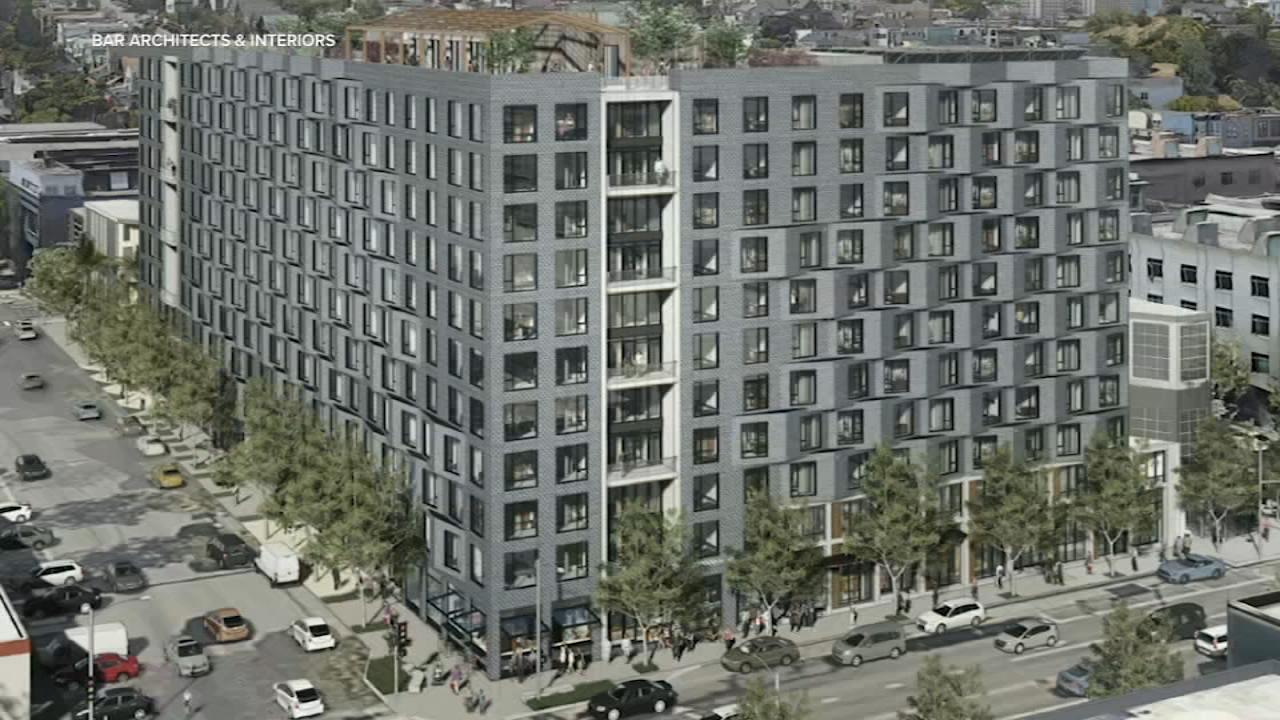
SAN FRANCISCO (KGO) -- San Francisco's housing crisis has become a defining issue for the city, pitting advocates who want more homes built against residents who worry new developments will alter the character of their neighborhoods.
As city leaders face mounting pressure to address a longstanding housing shortage, the debate has shifted from whether more housing is needed to where it should be built and what those projects should look like.
"We have been saying no to more housing pretty much until this moment in time," said Sam Moss, executive director of Mission Housing.
The roots of the issue date back to the 1960s, when zoning regulations limited building heights and gave neighbors significant power to challenge proposed developments.
Critics say those policies contributed to a severe housing shortage that became increasingly apparent by the 1990s.
MORE: San Francisco Mayor Daniel Lurie declares 'rent emergency' amid rising costs
State Sen. Scott Wiener said he became aware of the problem while working as an attorney representing tenants facing displacement.
"When I finally learned about housing in San Francisco and California -- but definitely San Francisco -- that we had zones for very little housing, that we made the permit process last years and years," Wiener said.
Until recently, San Francisco had one of the slowest housing approval processes among major U.S. cities, housing advocates say.
A major shift came in 2017 with the passage of Senate Bill 35, which streamlined approval for qualifying housing projects that include affordable units.
"So they can't take five years anymore. They can't just say no because they don't like it; they have to automatically grant the permit," Wiener said.
MORE: Construction begins on development to transform SF's Candlestick Park into waterfront homes
Moss said the law has already produced results.
"It has already resulted in thousands of new affordable homes that never would have existed, but because of the years and years, decades of bad decisions we are starting from far behind that eight ball, and it's going to take a while," he said.
Supporters of increased housing construction also point to California's Density Bonus Law, enacted in 1979, which allows developers to build additional units when projects include affordable housing.
In recent years, San Francisco has removed some barriers that previously discouraged developers from taking advantage of the law.
The changes have led to larger proposed developments across the city, often sparking opposition from neighbors.
MORE: Why San Francisco office-to-housing projects are gaining traction
In West Portal, plans call for replacing the former Empire Theater site with a residential development that grew from an initial proposal of 64 units to 172 units in a 12-story building.
"I believe something like that is just going to be an eyesore. Out of place? A little bit, I think so. I think there are probably other alternatives in the city to do something of that magnitude. But not here. No, not here, not in this neighborhood," said West Portal resident Richard Vigna.
Some residents also worry about the potential loss of existing neighborhood businesses.



"Our beautiful, beloved Goodwill might go away, and that's going to pave the way for this development," said Nancy Botkin, another West Portal resident.
Others say growth is acceptable but should be approached cautiously.
MORE: AI wealth ignites San Francisco home prices while Oakland stagnates
"Progress is progress, but let's not do everything we think of. Do everything practical and nice," said Kathy Klestoff.
Similar concerns have emerged elsewhere.
In the Lone Mountain neighborhood, an approved project at 230 Anza Street calls for an eight-story residential building in the middle of a largely residential block.
In Potrero Hill, a project at 16th and De Haro streets expanded from a proposed seven-story development with 290 multi-bedroom units to an 11-story project with 425 affordable studio apartments designed as group housing.
J.R. Eppler, former president of the Potrero Boosters Neighborhood Association, questioned whether that type of housing will promote longterm residency.
MORE: 'A million dollars over asking': AI wealth is fueling housing market frenzy in San Francisco
"This sort of housing that we're going to have, we hope that it's going to work out, because it's here. But we foresee it having a lot more people coming in and out quickly, not being able to become a full part of the community," Eppler said.
Despite the disputes, thousands of housing units have already received approvals.
City officials estimate roughly 74,000 units are currently in the development pipeline.
However, only about 3,300 units are actively under construction, largely because of high building costs and economic challenges facing developers.
MORE: Report finds weak oversight may put San Francisco supportive housing residents at risk
As a result, housing advocates acknowledge that meeting the city's housing goals by 2031 will be difficult.
"We are simply barely on the good side. It's going to be years before we see the ball rolling in the right direction," Moss said.
The debate underscores a fundamental question facing San Francisco: how to add enough housing to address affordability and population needs while preserving the character of neighborhoods that residents value.
The answer, city leaders and residents agree, will shape San Francisco for decades to come.