SF startup spreads crushed rock to speed carbon removal and capture greenhouse gas

SAN FRANCISCO (KGO) -- For decades, scientists have pursued futuristic technologies to trap carbon dioxide from the atmosphere. Now, a new startup is taking a much simpler approach - using crushed rock to accelerate a natural process that removes the greenhouse gas.
The effort began in academic research at Stanford University's Doerr School of Sustainability and has since spun off into a company called Terradot based in San Francisco.
The technology relies on pulverized rock spread over farmland to speed up chemical reactions that naturally bind with carbon dioxide and carry it into soil and water systems.
MORE: Experts warn faster snowmelt could strain water supplies, urgency for storage solutions
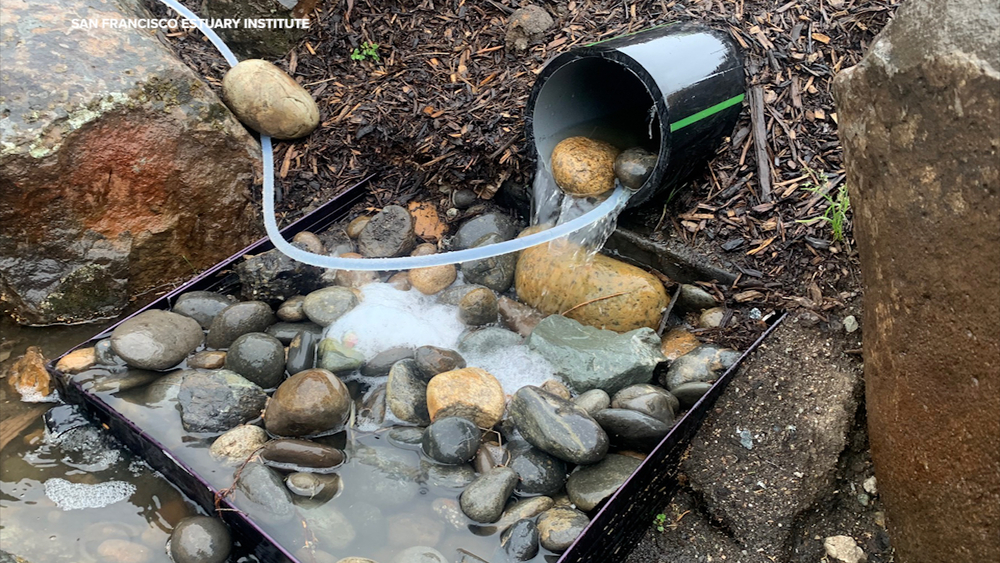
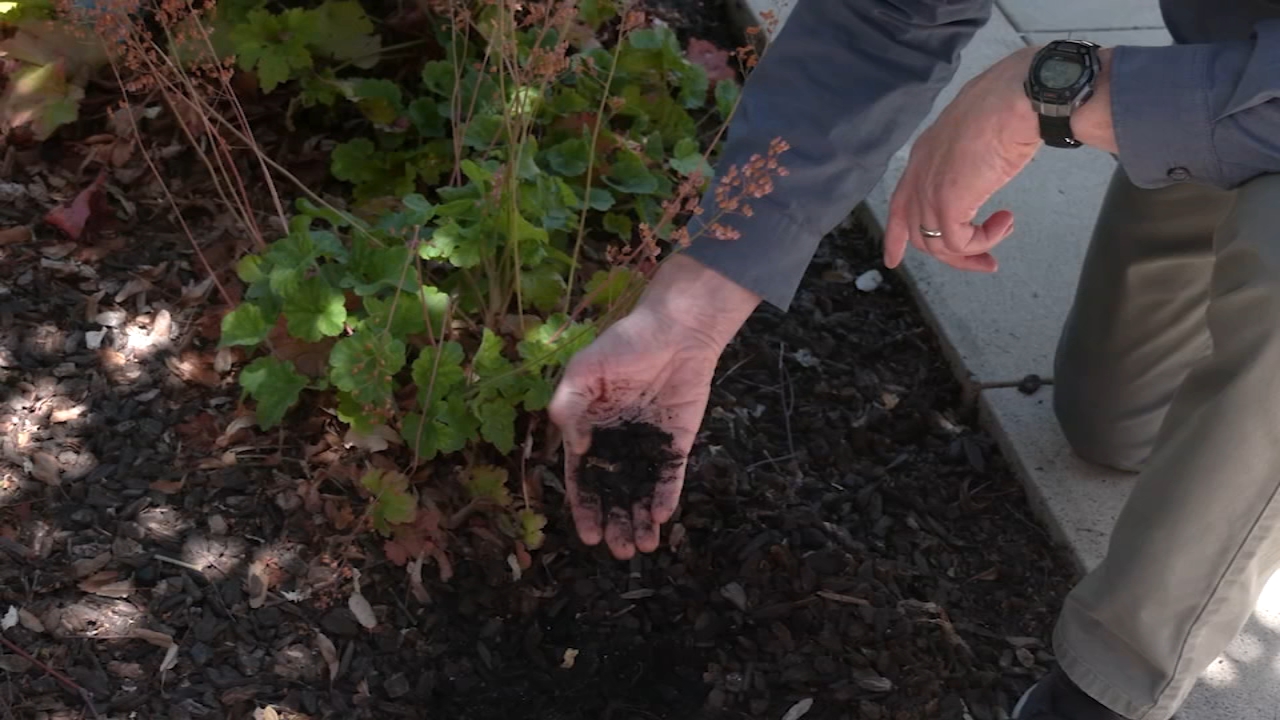
James Kanoff, a Stanford graduate and co-founder of Terradot, demonstrated the concept using the remains of a crushed boulder, which he described as a rock powder designed to hasten carbon removal.
"We take rocks that naturally remove carbon over really, really long time periods, and we crush them up to create a powder and spread them on farmland to make them remove carbon in years instead of millennia," Kanoff said.
The method, known as enhanced rock weathering, accelerates a process that already occurs in nature. Over thousands of years, storms and moisture slowly dissolve certain types of rock, triggering chemical reactions that bind with carbon dioxide in the atmosphere. That carbon is eventually carried into the ocean.
MORE: Parts of San Francisco are sinking at a rapid pace, NASA data shows
"That's naturally happening every single year. And so all Teradata is doing is speeding up that natural process by taking those same rocks, crush them up to speed up that reaction and ultimately get remove carbon instead of over 100,000 years to remove it," Kanoff said.
To develop the technology, Kanoff partnered with Scott Fendorf, Ph.D., a Stanford researcher and Terradot co-founder. Fendorf is known for his work studying how dangerous compounds form in soil during intense wildfires, a topic previously featured on ABC7. In this case, he said, the soil becomes part of the solution to removing a pollutant.
"Think of it as just a fine little powder that gets sprinkled over the top of the soil. It's not a deep layer, it's just a fine little veneer of rock that then gets turned into the soil," Fendorf said.
Terradot is now testing the concept at scale in a large farming region in Brazil, with backing from companies including Google and Microsoft. The company's goal is to precisely measure how much carbon dioxide the rock powder can sequester and to document the process before expanding operations to other regions.
"This is non-intrusive, and it can be powdered and spread over a large area. This integrates right into the agricultural production system. And in fact, it can help in many cases can really help yields," Fendorf said.
The company has also deployed the technology in the southeastern United States. Executives say a key factor in scaling up is identifying locations with nearby quarries or other rock sources to reduce transportation costs and streamline the supply chain.
Kanoff said the scale of the challenge underscores how early the work still is.
"We need to deliver billions of tons of carbon removal in order to actually help stabilize Earth's climate. That's the scale that we're talking about. And so when I think about where we are right now versus where we need to go, I feel like we're still basically just at the beginning," he said.