Musk v. Altman live updates: Former OpenAI board member and mother of Musk's children testifies

ByABC7 Bay Area Digital Staff and Frances Wang KGO logo
Last updated: Thursday, May 7, 2026 7:32PM GMT
Former OpenAI board member and mother of Musk's children testifies

OAKLAND, Calif. (KGO) -- Technology tycoons Elon Musk and Sam Altman are facing off in a high-stakes trial revolving around the alleged betrayal, deceit and unbridled ambition that blurred the bickering billionaires' once-shared vision for the development of artificial intelligence.

The trial centers on the 2015 birth of ChatGPT maker OpenAI as a nonprofit startup primarily funded by Musk before evolving into a capitalistic venture now valued at $852 billion.

The civil lawsuit accuses Altman, OpenAI's CEO, of double-crossing Musk by straying from the company's founding mission to be an altruistic steward of the technology.

ByJoe Dworetzky & Jay Harris Bay City News logo
May 07, 2026, 4:32 PM GMT

Shivon Zilis, former OpenAI board member and mother of Musk's children, testifies

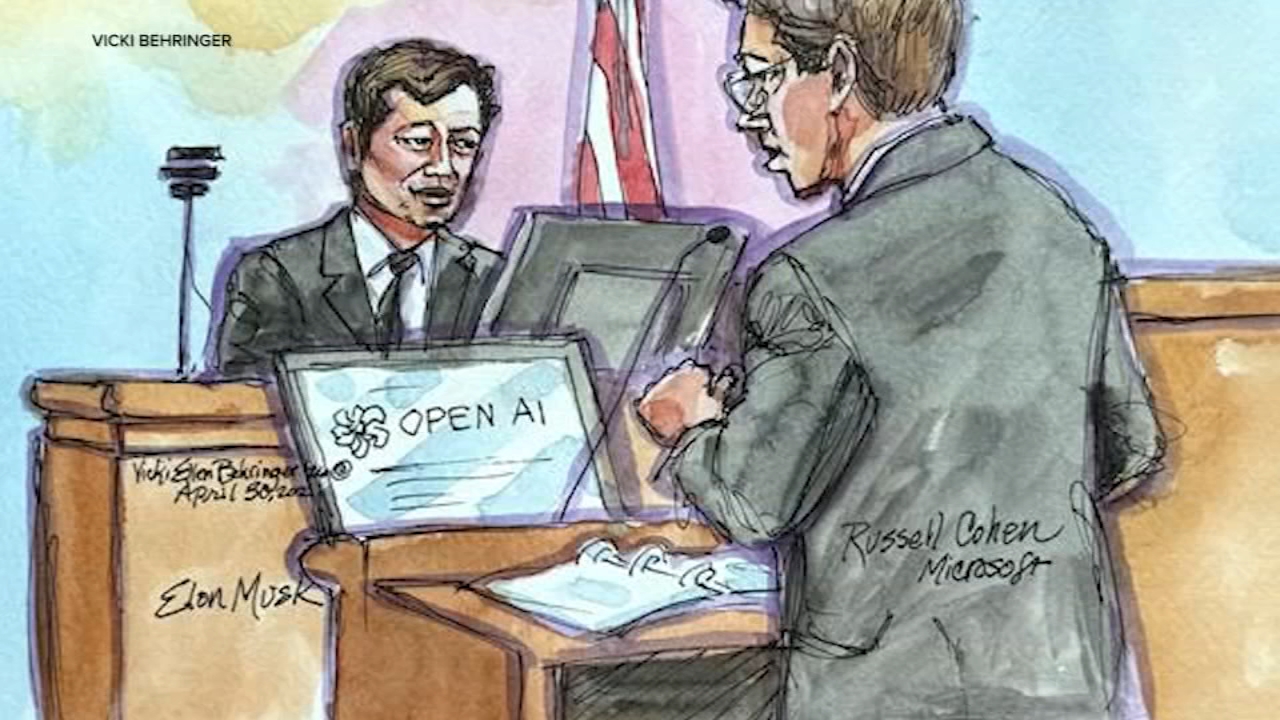
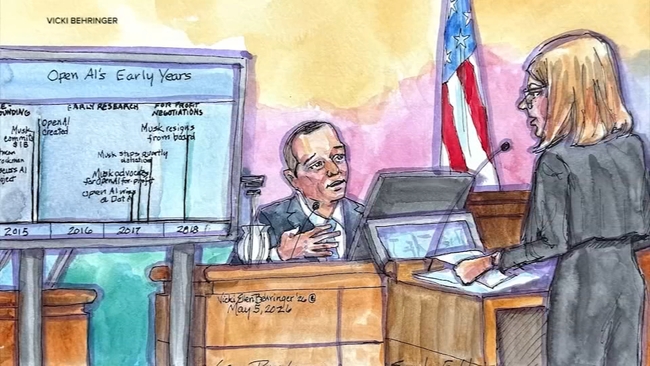
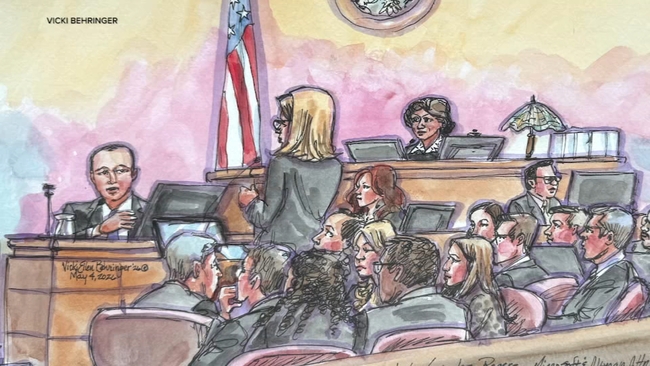
At the federal courthouse in Oakland Wednesday -- the seventh day in the trial of Elon Musk's lawsuit against Sam Altman and OpenAI -- the jury heard the testimony of Shivon Zilis, a former OpenAI board member with a close and complicated relationship with Musk.

Zilis provided testimony about her service as a board member of OpenAI and her role during a critical six-week period when the founders who created OpenAI as a nonprofit corporation considered a variety of alternative structures to raise money.

Musk's suit contends that Altman and Brockman breached their fiduciary duties to devote the charitable assets of OpenAI, a nonprofit corporation, solely to the nonprofit's mission of developing artificial intelligence for the benefit of humanity.

Zilis is a key witness for both sides because she was involved at OpenAI in a number of different capacities and roles. She was a senior counselor for Musk and had a close personal relationship with him. The two share four children, the oldest two are twins born in 2021. She also served on the board of OpenAI from 2020 to 2023 and voted to approve a 2023 contract with Microsoft in which Microsoft invested $10 billion and also obtained greater rights to some of OpenAI's intellectual property. Musk contends that the contract was a key part of the defendant's breach of the charitable trust.

Shivon Zilis' direct testimony

Zilis walked firmly to the stand, dressed all in black. She spoke crisply and directly, answering questions without embellishment, occasionally saying "of course" rather than "yes."

She testified that after earning an undergraduate degree from Yale, she obtained a series of positions with organizations in the artificial intelligence universe, including an AI incubator and a venture capital firm focusing on the developing AI industry.

She explained her deep interest in artificial intelligence, recounting that at 13 years old she read a book called "The Age of Spiritual Machines" by Ray Kurzweil, the prominent futurist. The book discussed a world in which machines surpass human intelligence. She said that she read the book 10 to 15 times and it influenced what she wanted to do in life. For the last 15 years, she said AI has been at the center of her life.

In the early days of OpenAI's corporate existence, Greg Brockman offered her a job as chief operating officer for the fledgling organization. Brockman, along with Altman, Musk and Ilya Sutskever, was one of OpenAI's founders and he serves as its current president. At the time, they had not yet developed any applications or products, so she didn't think that it made sense to be a COO. However, she was interested in the mission and offered to work 10 hours a week for free as an advisor.

She met Musk at OpenAI and later went to work for him at three of his companies: SpaceX, Neuralink and Tesla. She said she worked 80 to 100 hours a week, trying to find and fix bottlenecks in the workflow.

"It was just bananas," she said.

Zilis was deeply involved during discussions among the OpenAI founders in August and September of 2017 about strategies for raising capital for the company's rapidly increasing needs for computing capacity. She said she often provided information to Musk and Sam Teller, another Musk employee, about conversations she had with some or all of the other OpenAI founders.

She testified that the discussions went on for weeks and considered many different strategies -- some crazy -- to raise the money that would likely be needed to develop artificial general intelligence, or AGI. She said the ideas were very wide-ranging and none of the concepts were ultimately agreed to by all the four founders.

She said that the discussions ended in 2018 in a "weird halfway breakup" between Musk and the other three founders. Altman, Brockman and Sutskever accepted the existing nonprofit structure of OpenAI but did not abandon interest in forming a for-profit company that would be able to attract investment capital.

Musk left OpenAI's board in February 2018, but Zilis remained involved with OpenAI, sometimes providing information to Musk and Teller about what was happening at the company. She sought advice from Musk about how to handle the "tricky" trust issues.

According to Zilis, she asked Musk, "Do you prefer I stay close and friendly to keep information flowing or begin to disassociate [from the OpenAI founders]?" - to which he said the former.

Zilis testified that thereafter, Altman invited her to serve on the OpenAI board. She said she accepted because not many people in the world were interested in pursuing AGI for the benefit of humanity. She wanted to be part of that mission. She joined the OpenAI board in 2020 and served until 2023.

Zilis's board service was complicated due to her relationship with Musk. She testified she had a romantic relationship with Musk years before, and later, after she had health issues, she accepted Musk's offer to provide a deposit for IVF fertilization. By that process, she has had four children with him, the most recent one in February 2025.

She said Musk works "maniac hours" and has a complicated life. They agreed to keep confidential that he was the father of her children, but in July of 2022 after a media outlet told her they were going to report on it, she disclosed it to Altman and Brockman. She said that the board considered whether she would stay a board member and decided that she could. Once she was on the board, Zilis said that she did not discuss her work at OpenAI with Musk.

Although she considered Altman a friend, Zilis said that when she was on the board, there were several incidents that made her concerned about Altman's candor.

One was a proposal that OpenAI enter a large energy supply agreement with Helion Energy -- a company working on producing nuclear energy by fusion -- but at that time it had not demonstrated that it could do so at scale. Altman and Brockman had a financial interest in the company. The interests were disclosed to the board, and they did not vote on approval, but Zilis thought the deal was an outlier compared to the other deals they had considered as a board. She said it was "super out of left field" and a "major bet on a speculative technology." It gave her a bad feeling in the pit of her stomach, she said.

Cross-examining Zilis

Sarah Eddy, one of OpenAI's lawyers, conducted a lengthy cross-examination of Zilis, repeatedly using excerpts from Zilis's deposition transcript to point out areas where she thought Zilis' answer to her question was different than what she had said at her deposition.

Eddy went after several main points.

Because Musk has argued that the other founders should have continued to operate OpenAI in the way it was originally structured, Eddy got Zilis to concede that she did not know of any promise to keep OpenAI as a nonprofit or not to establish a for-profit subsidiary.

To rebut Musk's contention that the other founders had fully committed to stay with OpenAI and keep it a nonprofit, Eddy walked Zilis through the evidence that Brockman and Sutskever never agreed to Musk's proposal that they remain for two years and not recruit employees after leaving.

A key component of Musk's claim is that in 2023, OpenAI entered a transaction with Microsoft that, in Musk's words, was when the other founders "stole the charity." Eddy brought out that Zilis, as a board member of OpenAI, voted to approve the Microsoft agreement.

To support the claim of the other founders that Musk was scheming to create an AGI lab at Tesla, Eddy used her cross examination to grill Zilis on email exchanges where Musk considered poaching several OpenAI employees for Tesla.

To rebut the idea that Musk was in the dark about the other founders' plan for changing the corporate structure after he left the OpenAI board, Eddy focused Zilis on documentation that showed that Musk knew of OpenAI's creation of a for-profit subsidiary and considered making an investment. Musk ultimately declined to invest but said that he was "supportive in spirit."

Zilis was composed throughout her cross-examination, generally accepting what the contemporaneous documents said but offering to "put them in context."

The trial will continue Thursday with live testimony of David Schizer, former dean of Columbia Law School with personal experience in running a humanitarian nonprofit.

Schizer was engaged by Musk's lawyers to give an expert opinion on whether OpenAI lived up to its duties as a nonprofit corporation.
ByFrances Wang KGO logo
May 06, 2026, 3:56 AM GMT

OpenAI president testified he feared Elon Musk might hit him after power struggle for company

OpenAI President Greg Brockman testified that Elon Musk "gave up" on the company now valued at more than $850 billion, describing a tense moment.

OpenAI President Greg Brockman testified Tuesday that Elon Musk "gave up" on the company now valued at more than $850 billion, describing a tense moment in which Musk reacted angrily after learning he would not have control.

Brockman, questioned by his own attorney, said Musk got up and stormed around a table during a meeting, adding that he thought Musk was going to hit him.

Testimony resumed with Brockman characterizing his past journal entries as deeply personal writings that were never meant to be public.

He said seeing them play out in this lawsuit has been 'very painful.'

"Greg Brockman has been waiting a long time to have the opportunity to tell a story," said William Savitt, an attorney for OpenAI.

"And he got the story out. The cross-examination was largely an exercise in a frustrated lawyer yelling at a witness who wasn't saying what he wanted him to."

Jurors were shown a glimpse into OpenAI's early days, including a photo of employees working out of Brockman's San Francisco apartment more than a decade ago.

Brockman maintained that the company's mission has always been his primary motivation, with financial compensation, his stake now estimated at nearly $30 billion, secondary.

Marc Toberoff, an attorney for Musk, challenged that characterization.

"Just imagine if the president of Saint Jude's Hospital for the children or for children did something like that. Mr. Brockman referred to, quote, the mission over 50 times in his testimony over two days. But the question now is, whose mission is it?" Toberoff said.

Brockman also testified about Musk offering free Tesla vehicles, which he believed was an attempt to influence him, though he accepted one.

In a text message presented in court, Brockman was asked whether the Tesla would make him "willing to accept massively unfavorable terms."

"The truth is this. It's a lesson here about how tough it can be when you actually meet your heroes," Savitt said, referring to the power struggle that played out between OpenAI's cofounders.

Brockman was further questioned about former OpenAI board member Shivon Zilis.

He said he first learned about her children with Musk through media reports, but trusted her to manage any potential conflict of interest.

"Mr. Musk left the OpenAI board of directors and has, a relationship with Mrs. Zilis that put her in the position to communicate information to him, which she did," Savitt said.

Zilis later stepped down after Musk launched the competing company xAI and is expected to be the next witness.

On Monday, Musk's attorney portrayed Brockman as someone who admired and depended on Musk's influence, referring to his journal entries as a diary.

On Tuesday, the tables turned as Brockman described Musk as someone who did not get artificial intelligence and told the court Musk belittled a researcher to the point the person nearly left the field. That researcher later became a key figure behind ChatGPT.

ByFrances Wang KGO logo
May 05, 2026, 1:48 AM GMT

OpenAI president's journal entries take center stage

The second week of the Musk v. Altman trial began Monday in federal court with attention shifting from Elon Musk to co-defendant and OpenAI President Greg Brockman, as jurors heard testimony centered on Brockman's personal journal entries and debates over OpenAI's original nonprofit mission.

Musk was not in court, and the atmosphere outside the Oakland courthouse was noticeably calmer, with fewer protesters and smaller crowds. Inside, Musk's attorneys focused their questioning on Brockman, portraying him as motivated by money and drawn to Musk's influence during OpenAI's early years. At one point, Brockman was asked whether he was honored to work alongside Musk.

Marc Toberoff, an attorney for Musk, said, "Monday was a strong day in court."

Musk's legal team has long pointed to Brockman's journals as key evidence, arguing they show Brockman and co-defendant Sam Altman misled Musk about maintaining OpenAI as a nonprofit organization.

"In particular, Mr. Brockman's testimony and his journal, in his own unfiltered words, reinforce our confidence in our claims, and we look forward to continuing to build on this progress as the case proceeds," Toberoff said.

One 2017 journal entry introduced in court shows Brockman writing: "Financially, what will take me to $1B?" On the witness stand, Brockman testified that his stake in OpenAI is now worth nearly $30 billion. Musk's attorney pressed Brockman on what motivates him and why he didn't donate the difference of $29 billion back to the nonprofit.

William Savitt, an attorney for OpenAI, objected to that line of questioning, calling it "Theatrical grandstanding questions completely irrelevant to the lawsuit."

Toberoff honed in on that part of the testimony, adding of Brockman: "He's speaking as the director and officer of a nonprofit, a publicly subsidized nonprofit, and he's writing secretly. How do I get to $1 billion?"

Questioned about OpenAI's original charter, Brockman testified that its stated mission to serve humanity through artificial general intelligence remains intact.

"I think it is still accurate," Brockman said, adding, "I do stand by this is what we've been doing."

He denied breaching any duty to humanity, arguing the company's current structure has produced what he called "the most well-resourced nonprofit in history."

Brockman acknowledged that Musk personally helped OpenAI recruit top talent in its early days and said some prospective hires were often eager to meet Musk. He agreed that Musk's involvement lent OpenAI credibility and said some candidates were drawn to the opportunity to work alongside him. In a January 2018 email shown to the jury, Brockman wrote to Musk that it was an "honor to work alongside him," a statement Brockman confirmed on the stand.

Jurors also heard from UC Berkeley professor Stuart Russell, who testified as an expert witness on artificial intelligence risks. The judge, however, already barred any discussion of existential threats related to AI. Russell disclosed he was paid $5,000 an hour for his work on this case, totaling roughly $250,000, or about 20% of his annual earnings.

A newly revealed court filing shows Musk and Brockman exchanged text messages two days before the trial, discussing a possible settlement. After talks fell apart, Musk texted Brockman: "By the end of this week, you and Sam will be the most hated men in America. If you insist, so it will be."

The judge has ruled that those texts are not admissible at trial.

As Brockman's testimony began, the attorney said, "And now he has the opportunity to tell his story, which he's going to do tomorrow, and it'll be the story that will carry the day, because it's the story that is true, which is that it's a complex organization and a complex problem."

At one point Monday, Brockman defended his journal entries, describing them as expressions of frustration rather than a concrete plan. Musk's attorney pushed back, asking how often Brockman had rehearsed that explanation before taking the stand.

Brockman is expected to return to the witness stand on Tuesday as the trial continues in Oakland.

ByHadas Gold CNNWire logo
May 04, 2026, 8:25 PM GMT

Musk wanted to settle with OpenAI just days before their courtroom showdown, new filing says

Elon Musk sought a potential settlement with OpenAI two days before his massive trial against the ChatGPT maker began last week, a new court filing from OpenAI says.

Musk sent a message to OpenAI President Greg Brockman "to gauge interest in settlement" on April 25, according to a filing submitted Sunday evening by OpenAI. The trial, which could shake up the AI race by removing CEO Sam Altman and Brockman from OpenAI's board if Musk gets his way, kicked off in a federal courthouse in Oakland, Calif. last week.

"When Mr. Brockman responded with a suggestion that both sides drop their respective claims, Mr. Musk shot back: 'By the end of this week, you and Sam will be the most hated men in America. If you insist, so it will be,'" the filing states.

Musk sued OpenAI and its leaders claiming they breached a charitable trust and unjustly enriched themselves by transitioning from a nonprofit to its current structure. The AI company is now a for-profit benefit corporation overseen by a nonprofit foundation.

Musk, who helped co-found and fund OpenAI, claimed the company and its executives deceived him into donating money to help create what is now one of the world's biggest AI companies, accusing them of "stealing a charity" in his testimony.

OpenAI claims Musk had pushed for a for-profit structure and is only pursuing legal action to bring down a competitor after he wasn't able to retain control over the company. Musk left OpenAI's board in 2018 and founded his own AI company, called xAI, in 2023.

OpenAI's attorneys tried to submit Musk's messages as evidence.

"It tends to prove motive and bias, and, in particular, that Mr. Musk's motivation in pursuing this lawsuit is to attack a competitor and its principals," the attorneys wrote in the filing.

But Judge Yvonne Gonzalez Rogers denied the request, telling OpenAI's attorneys they should have submitted it as evidence during Musk's testimony.

Musk's attorney did not immediately respond to a request for comment.

Altman worried that Musk would drop the case right before the trial, leaving him and OpenAI without a chance to tell their side of the story, he said on the Core Memory podcast last month.

OpenAI attorneys, who at times clashed with Musk in the courtroom last week, presented evidence they said showed Musk wanted a for-profit corporation, including evidence that he directed his associates to register a corporation in OpenAI's name. Musk's attorneys presented messages from 2022 in which Musk told Altman that OpenAI's $20 billion valuation following Microsoft's $10 billion investment felt like a "bait and switch."

"I agree it feels bad," Altman replied, before noting Musk declined the equity OpenAI offered him.

Brockman, OpenAI CEO Sam Altman and other high-profile figures in the tech industry are also expected to testify over the next couple of weeks.

The-CNN-Wire & 2026 Cable News Network, Inc., a Warner Bros. Discovery Company. All rights reserved.