Doctor says hantavirus likely will not have outbreak like COVID or influenza
A doctor said the hantavirus will likely not have an outbreak like COVID or influenza because of how it is spread.

He said the threat to the public is very low.
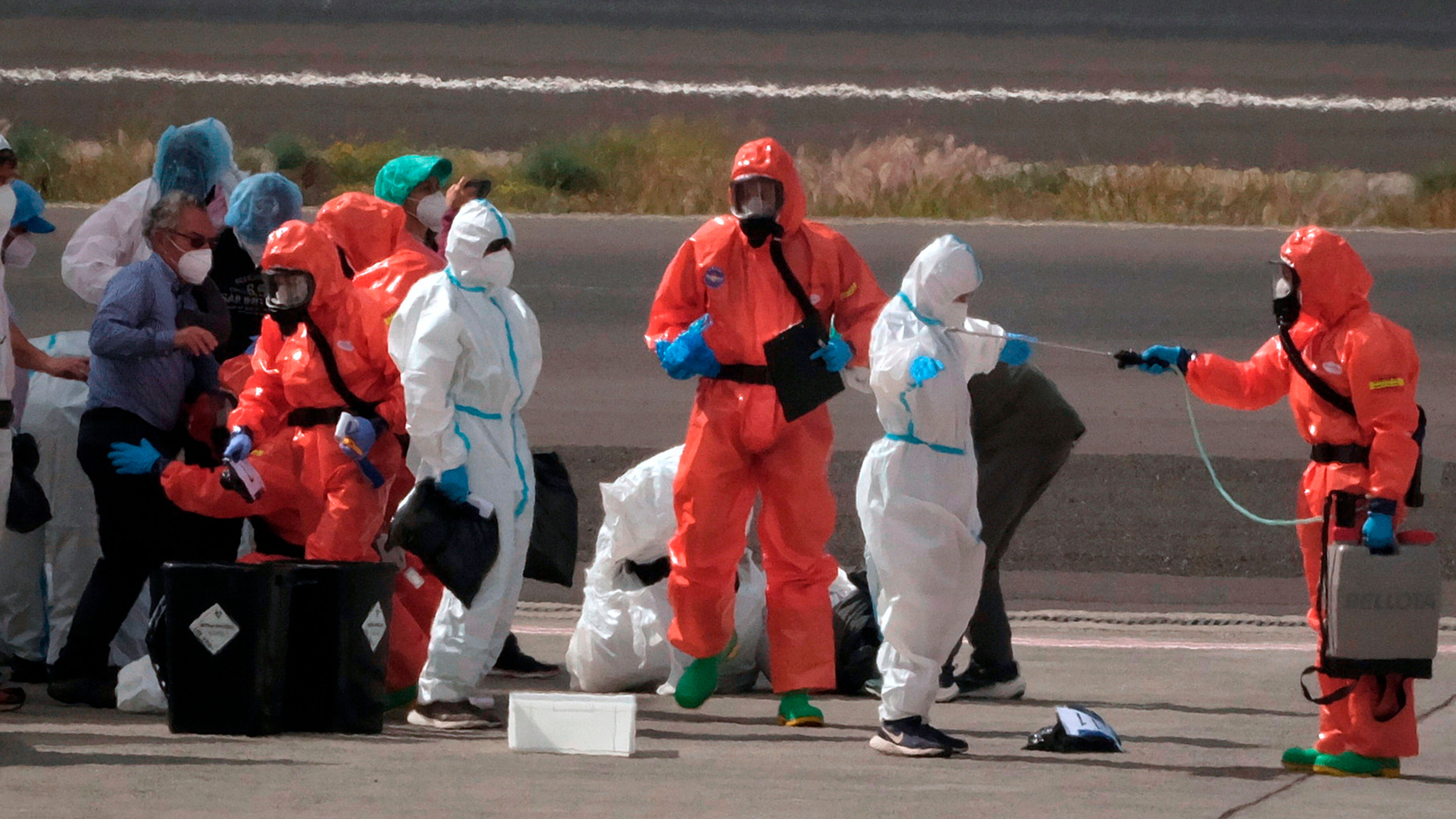
A flight carrying U.S. citizens who were on the ship arrived Monday in Nebraska.

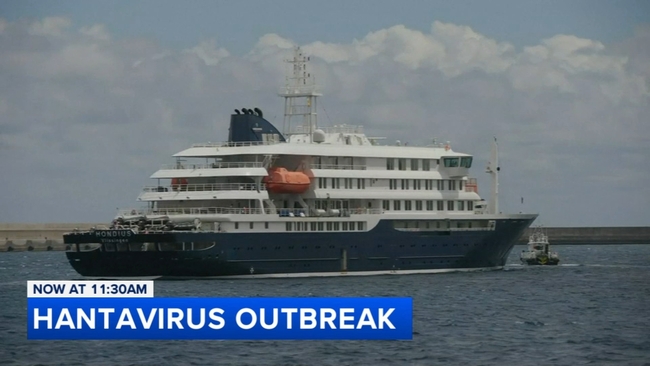
Passengers onboard the MV Hondius cruise ship started disembarking Sunday in Tenerife, in the Canary Islands, to be transferred to charter flights back to their home countries.
The total number of confirmed and probable cases of hantavirus onboard the ship has risen to 10, including two people confirmed to have died from the virus and one person who remains suspected to have died from the virus.
On Monday, 16 American cruise ship passengers arrived at the University of Nebraska Medical Center, 15 are in the quarantine unit and one person is in the biocontainment unit, officials said. Two other American cruise ship passengers were flown to Atlanta "for further assessment and care," officials said.
Here's what you need to know about hantavirus including what it is, how it spreads, how it's treated and if there are any prevention methods:
Hantaviruses are a family of viruses that can cause serious illnesses and death, according to the CDC.
Hantaviruses may also spread from person to person, but that also is rare and only suspected for one subtype, the Andes virus, from South America, according to the WHO.
There are currently no approved vaccines anywhere in the world that specifically protect against the Andes virus, but scientists are working on it.
Read more about hantavirus here.

A doctor said the hantavirus will likely not have an outbreak like COVID or influenza because of how it is spread.

He said the threat to the public is very low.

There are likely 10 total hantavirus cases, including one American and one French passenger who tested positive after disembarking the ship, officials said.
Of the 18 U.S. residents who were repatriated, 16 are in Nebraska: the one who tested positive is in biocontainment and the 15 who did not test positive are in quarantine, officials said. The other two U.S. residents are in Atlanta, officials said.
Additionally, nine U.S. cruise ship passengers who disembarked prior to the outbreak being discovered are being monitored by state health departments, officials said. Two are in Texas, two are in Georgia, one is in Virginia, one is in Arizona and one is in California.
Another two Americans who were exposed during air travel are in New Jersey, officials said.

The recent cruise ship outbreak has put renewed attention on the Andes virus, a rare type of hantavirus that can spread between people and cause severe respiratory illness. But despite decades of research, there is still no approved vaccine in the U.S.
In the U.S., researchers are testing DNA hantavirus vaccines, which use genetic material to trigger an immune response. Despite showing early promise, the shots are still a long way off from FDA approval.
RELATED: Here's what to know about hantavirus vaccines after the cruise ship outbreak
There are currently no approved vaccines anywhere in the world that specifically protect against the Andes virus, but scientists are working on it.
Current and future vaccines target high-risk groups rather than the general public, according to the World Health Organization.
The Andes virus can cause a severe respiratory illness with a mortality rate of about 38% and remains the only hantavirus known to spread from person to person, with symptoms appearing anywhere from 4 to 42 days after exposure, according to the CDC.
The overall risk for hantavirus infection remains extremely low for most people, according to the CDC. Health experts stress that what's unfolding with passengers on the cruise ship is unlikely to morph into a global pandemic.
- Dr. Jennifer Miao and Dr. Megan Still

The "risk of hantavirus to the general public remains very, very low," Dr. Brian Christine, Assistant Secretary for Health at the Department of Health and Human Services, said at a news conference on Monday.
The Andes variant "does not spread easily, and it requires prolonged, close contact with someone who is already symptomatic," he assured.
Even though, he said, the department has taken the situation "very seriously from the very start."