California seeing spike in rattlesnake bites, 3 deaths reported so far in 2026


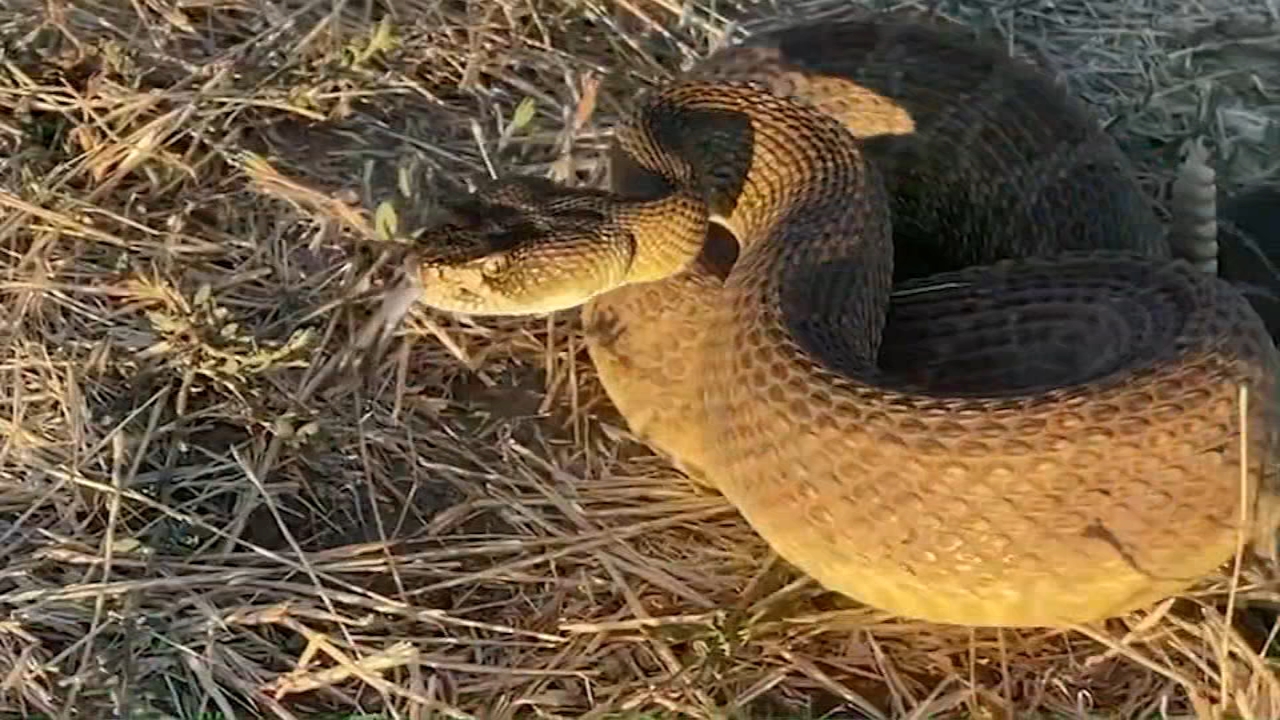
SAN FRANCISCO (KGO) -- As hiking season ramps up across California, experts are warning that rattlesnake encounters are also on the rise, and this year the danger appears to be greater than usual.
So far this year, officials say there have already been at least 77 rattlesnake-related calls and three deaths reported. That is especially concerning because California typically sees only one rattlesnake death a year.
Dr. Rais Vohra with the California Poison Control System's Fresno-Madera division said the early surge is unusual.
MORE: 78-year-old woman dies from snake bites in Northern California: Sheriff
"This is a trend that has us concerned. Snakebite season typically starts in April and goes through the summer months, and for some reason in 2026, we really started to see a lot more bites in the earlier months like January, February, and March," Vohra said. "We are not sure exactly why this trend is happening. There are certainly a lot of hypotheses, and our colleagues in herpetology are trying to study whether it is a habitat issue, an environmental issue, or one of those abnormal years."
Poison control officials say most rattlesnake bites happen when people get too close.
"They are not going to attack human beings. That is not their natural instinct," Vohra said. "Bites are usually a reflex or a defensive maneuver because they felt threatened. The best thing to do is to keep your distance, back up, do not make sudden moves, do not approach. Let it go on its own way, and that is the best way to resolve a meeting out in nature with a rattlesnake."
Vohra also offered guidance for pet owners, noting veterinarians are seeing an increase in dog bites as well.
MORE: Vicious squirrel sends 2 San Rafael residents to ER after neighbors report series of attacks


"Vets are seeing an increase in bites. There are ways for dogs to be protected. For example, they do make a vaccine your pet might qualify for if you talk to your veterinarian," he said. "Unfortunately, people do not get access, but dogs might. Make sure your dog is on a leash, you know where it is and you keep it out of trouble."
Experts recommend hikers wear sturdy shoes, carry a walking stick, and keep a fully charged cellphone in case someone is bitten.