Musk v. Altman live updates: Tesla CEO spars with OpenAI attorney over company's evolution

ByABC7 Bay Area Digital Staff and Frances Wang KGO logo
Last updated: Friday, May 1, 2026 4:12AM GMT
Musk spars with OpenAI attorney over company's evolution

OAKLAND, Calif. (KGO) -- Technology tycoons Elon Musk and Sam Altman are poised to face off in a high-stakes trial revolving around the alleged betrayal, deceit and unbridled ambition that blurred the bickering billionaires' once-shared vision for the development of artificial intelligence.

The trial, which is scheduled to begin Monday with jury selection, centers on the 2015 birth of ChatGPT maker OpenAI as a nonprofit startup primarily funded by Musk before evolving into a capitalistic venture now valued at $852 billion.

The civil lawsuit accuses Altman, OpenAI's CEO, of double-crossing Musk by straying from the company's founding mission to be an altruistic steward of the technology.

CNNWire logo
Apr 29, 2026, 4:59 PM GMT

Musk testifies for 2nd day: 'I was foolish enough to believe him'

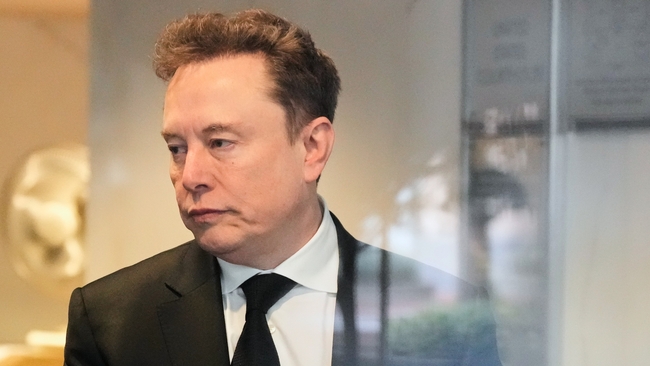
Elon Musk took the stand for a second day of testimony against OpenAI and its leaders in a lawsuit that could reshape the future of artificial intelligence, as the emerging technology has sent ripples through the economy and financial markets.

Musk claims OpenAI betrayed its initial nonprofit mission when it changed its corporate structure; OpenAI, for its part, claims Musk's suit is meant to derail its position as a competitor to his own artificial intelligence company, xAI.

In court, email exchanges between Musk and Altman were shown.

On one e-mail exchange between the two about the non-profit structure, Musk reflects: "I was foolish enough to believe him.'

Musk said he received reassurances that OpenAI would remain non-profit and continued to donate over what he estimates was $10 million.

ByFrances Wang KGO logo
Apr 29, 2026, 2:20 AM GMT

Musk testifies on how he sees AI evolving

Musk said he expects AI to be "smarter than any human" as soon as next year. Musk said a longstanding concern about AI is the question of what happens when computers become much smarter than humans.

Musk was called as the first witness shortly after noon, following opening statements from attorneys for OpenAI and Microsoft. When questioned by his own legal team, Musk said the defendants were trying to complicate this case.

He told jurors that, in his view, the case could set a precedent that risks losing every charity in America, adding that the consequences "go far beyond me."

Once sworn in, Musk spent much of the first part of his testimony walking jurors through his personal background. He described moving to North America because he wanted to be part of the technology industry, and recalled early jobs as a lumberjack and restaurant server before his first business ventures.

Musk then outlined the origins of companies he later founded or led, including PayPal, SpaceX and Tesla. He said SpaceX was created to make life multiplanetary and preserve human consciousness, while Tesla grew out of his belief that electric vehicles were essential for the future. He also briefly discussed Neurolink and The Boring Company, telling jurors he works 80 to 100 hours a week and does not take vacations.

"No vacation homes, no yachts or anything," Musk said.

About 30 minutes into his testimony, Musk turned to artificial intelligence. He explained artificial general intelligence, or AGI, as a point where AI becomes as smart or smarter than any human.

"I think we are getting close to that point," Musk said, adding, "My guess is AI will probably be smarter than any human... next year."

Jurors appeared closely focused as he spoke.

Musk compared developing AI to raising a child, something you cannot fully control, he said, but can try to guide with values. He described himself as "extremely concerned" about AI and said he has been for a long time.

He also recounted a past disagreement with Google cofounder Larry Page, saying Page once called him a "speciest" for prioritizing human survival. Musk told jurors he found Page's stance "insane."

Musk said he also tried to warn former President Obama about the risks of AI, but at the time, "AI was not good enough to seem scary smart." He added, "Here we are in 2026, AI is very smart."

Later in his testimony, Musk described his early interactions with Altman, saying the two attended meetings and dinners during the early days of AI discussions. Altman was not in the courtroom during the entirety of Musk's testimony, though cofounder Greg Brockman remained.

The trial continues this week, with additional witnesses expected to testify as both sides lay out sharply different accounts of OpenAI's origins and mission.

AP logo
Apr 28, 2026, 9:48 PM GMT

Both sides recount the start of a bitter divide

In his opening statement, OpenAI lawyer William Savitt told jurors "we are here because Mr. Musk didn't get his way with OpenAI."

Savitt said Musk used his promises of funding to bully OpenAI founding members and tried to take control of OpenAI and merge it with Tesla. In fact, he said Musk wanted to form a for-profit company and own more than 50% of it.

There is no record, Savitt said, of promises made to Musk that OpenAI was going to remain a nonprofit forever. What Musk ultimately cared about, he said, was not OpenAI's nonprofit status but winning the AI race with Google.

Musk's attorney said the case is not about Musk, but rather Altman, Brockman and Microsoft.

By 2017, about two years after OpenAI's founding, it became clear that OpenAI would need more money, and Molo said the founders eventually settled on the idea of creating a for-profit arm of OpenAI that would support the nonprofit. Terms were capped for investors so they "couldn't make infinite profit."

"There is nothing wrong with a nonprofit having a for-profit subsidiary, but (it) has to advance the mission," Molo said.

Microsoft initially invested $2 billion in OpenAI. Then, in 2022, news spread that OpenAI had done a deal with Microsoft and it was a "game-changer," Molo said, which violated "every commitment" OpenAI made not just to Musk but to the world. It was no longer open source, it became a for-profit company for the benefit of the defendants and Microsoft was going to have control, through licensing, of much of its intellectual property, Molo said.

After opening statements, Musk's side began presenting a tale of alleged betrayal, deceit and ambition that caused OpenAI to pivot from its founding mission as an altruistic startup to a capitalistic venture now valued at $852 billion.

BySamantha Delouya, Hadas Gold CNNWire logo
Apr 28, 2026, 8:08 PM GMT

Elon Musk testifies Tuesday

Elon Musk took the witness stand Tuesday in his lawsuit against OpenAI, its CEO Sam Altman and president Greg Brockman, which claims that the ChatGPT maker deceived him and betrayed its original mission.

The jury's verdict will advise Judge Yvonne Gonzalez Rogers as she decides whether Musk gets his wish: reversion of OpenAI to a nonprofit structure, the removal of Altman and Brockman from OpenAI's board, and around $130 billion in damages to go back into OpenAI's nonprofit foundation.

Beyond the remedies Musk is demanding, the trial threatens to derail one of the world's largest AI companies - and one of Musk's biggest artificial intelligence rivals - as it makes plans to go public as early as this year. OpenAI has consistently pushed back against Musk's claims and says his suit is one based on jealousy and regret.

The battle between two of the biggest AI pioneers, Musk and Altman, could shape the future of the emerging, but already wildly influential, technology. OpenAI's IPO is expected to be a blockbuster, and the money it raises could help it dominate an industry in which it had an early lead. On the other hand, if Musk wins, his own xAI company could set back a major rival and potentially leap ahead.

The trial was already contentious even before any testimony.

Musk spent part of Monday posting on his social media platform X about his lawsuit against OpenAI, its CEO Sam Altman and president Greg Brockman, and Musk's claims in the suit that the ChatGPT maker deceived him and betrayed its original mission.

"Scam Altman and Greg Stockman stole a charity. Full stop," read one of Musk's missives.

Rogers scolded Musk on Tuesday morning for his recent social media posts about the trial and threatened a gag order before the jury arrived in the courtroom.

Musk's posts will "only make things worse," she said. Musk agreed to limit his social media posts about the suit; Altman and Brockman similarly agreed.

And Musk could face other hurdles in his quest. Musk's lawyers on Monday struck several potential jurors who harshly criticized their billionaire client, including one who referred to Musk as "greedy" and a "piece of garbage" in their pre-questionnaire form and another who said their partner's job was "harmed" by the Department of Government Efficiency (DOGE) cost-cutting initiative that Musk lead in the Trump administration.

"The reality is that people don't like him. Many people don't like him. That does not mean that Americans can't have integrity for the judicial process," Judge Rogers told Musk's attorneys.

Jurors expressed few opinions about Altman, who was in court for jury selection. In the end, the jurors selected were largely those who said they had a neutral opinion of Musk or of AI.

Emails, text, call logs and more

Musk cofounded and helped fund OpenAI as a nonprofit in 2015, giving what he says amounted to at least $44 million in its first few years. But he split from the company in 2018 after an acrimonious power struggle. (Musk went on to later found his own AI company, xAI.)

A year after his exit, OpenAI created a for-profit subsidiary to raise more cash. In 2025, the company further evolved into a for-profit public benefit corporation, under the OpenAI foundation. Musk claims the shift betrayed OpenAI's original nonprofit mission to develop safe, open-source AI technology for the public good - and that the company's leaders, including Altman and Brockman, wrongfully profited from his charitable contributions, according to the lawsuit.

Microsoft, which Musk named as a co-defendant in the case, is accused of aiding and abetting OpenAI's breach of charitable trust. In a motion to dismiss, Microsoft called Musk's arguments "devoid of factual specificity and substantiation, repeatedly relying on unsupported 'information and belief."

But OpenAI says Musk himself pushed for a for-profit structure. Musk left the company because he was not able to assume total control, OpenAI said in a statement, and his suit is "motivated by jealousy, regret for walking away from OpenAI and a desire to derail a competing AI company."

Hundreds of pages of emails, texts, call logs and documents submitted as evidence will shed an inside view of the case, both before and after Musk left the company - communications that, in many cases, take a far different view in private than public social-media declarations.

In one 2023 email submitted as an exhibit, Altman tells Musk he's his "hero" but that he's hurt by his attacks on OpenAI.

"I hear you and it is certainly not my intention to be hurtful, for which I apologize, but the fate of civilization is at stake," Musk said in response.

The-CNN-Wire
& 2026 Cable News Network, Inc., a Warner Bros. Discovery Company. All rights reserved.