Elon Musk clashes with defense attorney during cross-examination in trial over OpenAI's origins
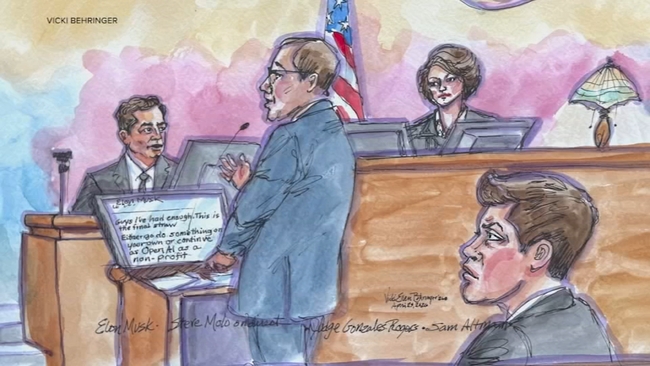
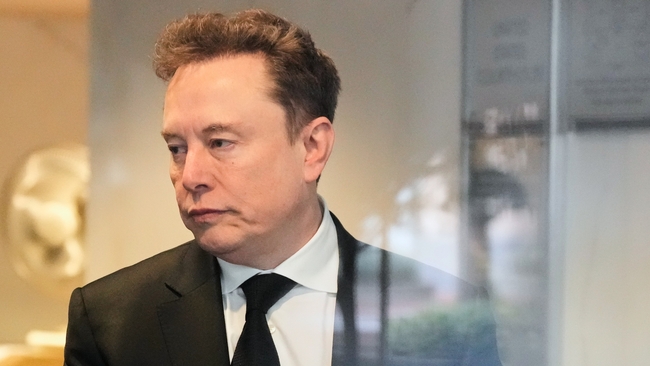
Elon Musk clashed with a defense attorney Wednesday during cross-examination in his federal trial over OpenAI's origins, with repeated courtroom tension, judicial intervention and disputes over early company emails and structure.
Musk, who was being questioned for a second day on the witness stand, pushed back against questions from defense attorney William Savitt, arguing at times that they were misleading.
At one point, Musk told Savitt his questions were "not a simple yes or no" and were "designed to trick me," prompting continued back-and-forth between the two. He also said some of the e-mails and messages he was asked about in court were difficult to recall as they were many years ago.
The exchanges escalated enough for Judge Yvonne Gonzalez Rogers to intervene several times, instructing both sides to stop speaking over one another so the jurors could hear what they were saying and also so the court reporter could transcribe.
Savitt, who previously represented Twitter in its legal battle with Musk over his $44 billion takeover of the company, is now part of the defense team representing OpenAI.
The case centers on Musk's claim that OpenAI deviated from its founding mission as a nonprofit created to benefit humanity. Musk helped found the company in 2015 and invested roughly $38 million.
He alleges the organization shifted away from its original charitable purpose as it moved toward a more commercial structure. Musk has argued the company should have remained under nonprofit control and has accused OpenAI leadership of straying from its founding commitments.
Defense attorneys, however, have pointed to emails, text messages and deposition testimony they say show Musk was aware of and at times supported discussions about alternative corporate structures, including arrangements involving for-profit entities supporting nonprofit work.
In court, Savitt presented several pieces of evidence he argued showed Musk's early proposals envisioned him holding significant control.
Musk argued that control would have decreased as the company brought in additional investors and board members
The defense has argued the dispute is ultimately about control and competition in the artificial intelligence industry, alleging Musk became critical of OpenAI only after losing influence and later launching his own AI company, xAI. Savitt questioned Musk on his reasonings for cutting off quarterly funding in 2017, wondering if it was to force "financial pressure" on a company he felt he couldn't gain
control of.
Savitt said the evidence "is not as how Mr. Musk has described them," referencing what he characterized as a broader documentary record of early discussions and agreements.
Musk has maintained he was never opposed to a for-profit structure so long as profits are capped and the organization continues to serve its original nonprofit mission. He has also accused OpenAI leadership of abandoning that mission and has described himself as having been misled.
The defense, meanwhile, has portrayed Musk as a founder who became dissatisfied after failing to secure control and later withdrew financial support as tensions escalated.
Musk is expected to return to the stand Wednesday to complete cross-examination. Two additional witnesses are expected to follow and then next up: defendant and OpenAI Greg Brockman.