Officials detail issues with water system as Tracy Medline warehouse fire continues
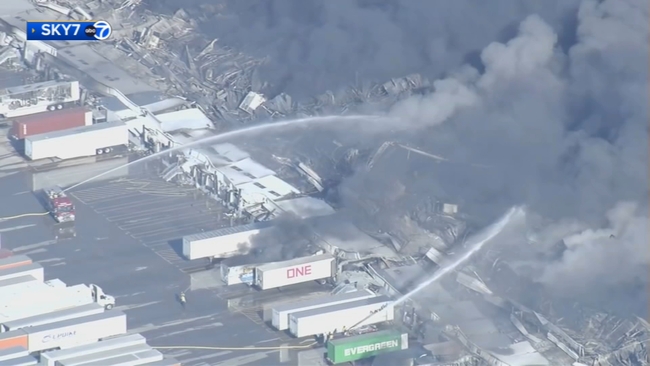
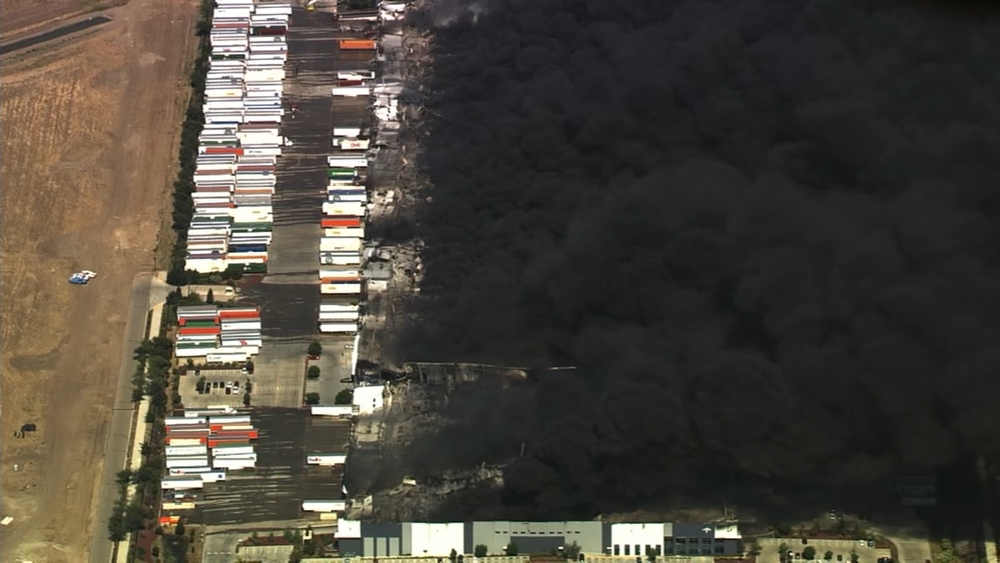
A massive warehouse fire in Northern California is still burning more than 24 hours after the building exploded into flames on Thursday.
Officials say that a fire involving a 1-million-square-foot building like this has occurred only a few times in U.S. history.
Fire officials say it is still too hot for investigators to go inside for at least a few more days. The warehouse's sprinkler system failed and there were problems getting water out of the hydrants. That all stalled firefighters' efforts to knock this fire down.
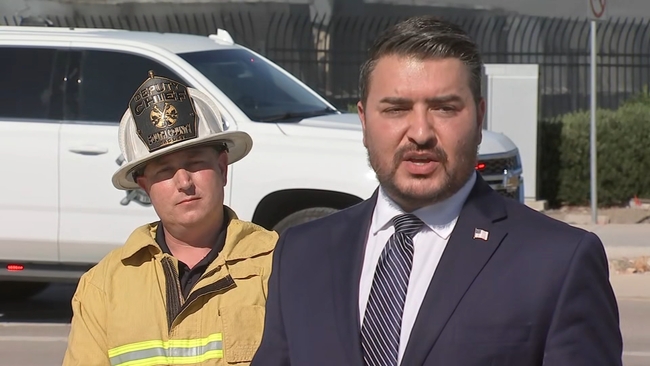
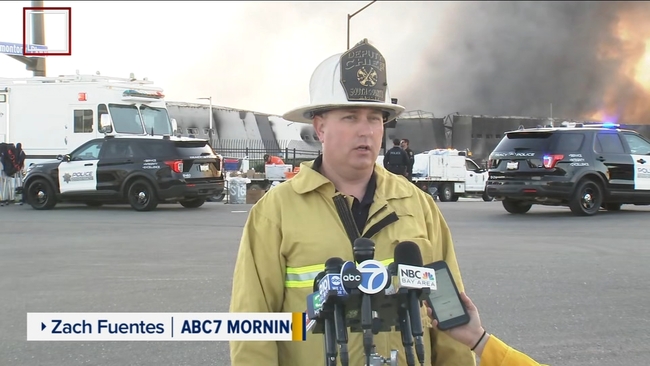
"It's very, very challenging. You can imagine, it's a skyscraper laying on its side," said Deputy Chief Brian Bagley with the Tracy Fire Department.
Bagley said Thursday's Medline warehouse fire is one of the largest warehouse fires in U.S. history. Over 1 million square feet burned.
Once on site, firefighters faced immediate water challenges.
"When our crews were engaging in the firefight, they did not recognize any fire sprinkler activations at all, throughout the entire facility. And they were in there for a solid 10 minutes trying to knock down the fire," Bagley said. "And the fire spread laterally from all the high-rack piles storage very, very quickly. Which if there were sprinkler systems activated, that would not run that fast, so. And they did see any actual water on the inside."
Fire officials say the warehouse sprinkler system passed a mandated inspection in January. But when the fire marshal arrived on scene, he checked out the fire pump room -- which gets water to all the sprinkler heads -- and found more problems.
"That was reading at zero. So, we knew there was no water flowing -- which all of that fire pump also supplies the yard hydrants directly adjacent within the facility itself," Bagley said. "So, we were limited to no water coming out of those hydrants."
The Medline warehouse manufactures, stores and distributes critical medical and surgical supplies for hospitals, nursing homes and clinics. Fire officials say various chemicals and hazardous materials are stored here -- they all caught fire, which may be another reason why the fire spread so quickly.
The facility also uses several hundred state-of-the-art robots; their lithium-ion batteries raise more concerns.
"And so, all of that all burned. And lithium-ion batteries that get destroyed by fire end up causing hydrogen fluoride gas, and that's not good," Bagley said.
Given the massive size of the fire, and its intensity, Bagley said aerials drops, as seen in wildfires, wouldn't have been effective.
"Those are very effective for light, flashy fuels. They don't burn very long, but they burn very rapidly. The materials, or course of this type of construction here -- distribution center -- is very robust. So, in order to penetrate, it is a lot of water that it takes," he said.
Officials say this fire will likely impact hospitals across the country, since this is the main distribution center. Medline says it has set up a command center and is working on contingency plans to get medical supplies to the hospitals.